

Navigating the world of industrial filtration can feel like decoding a secret language, especially when it comes to HS codes. Whether you’re a merchant sourcing products or an engineer optimizing processes, understanding the HS code for industrial filter bags is crucial. These codes not only streamline international trade but also ensure you select the right filter for your specific needs. So, how do you crack the code to find the perfect match for your filtration demands?

Decoding Industrial Filter Bag HS Codes: A Comprehensive Guide to Classification and Rules
When it comes to international trade, especially in the specialized field of industrial filtration, understanding the Harmonized System (HS) codes for industrial filter bags is crucial. These codes, a standardized global system for classifying traded products, not only streamline customs processes but also help buyers and sellers accurately identify and categorize their goods. So, let’s dive into the world of industrial filter bag HS codes, unraveling their basic classifications and the underlying encoding rules that define them.
First off, what exactly is an HS code? In simple terms, it’s a six-digit code assigned to specific products to facilitate their international trade. For industrial filter bags, these codes are more than just numbers; they’re a gateway to understanding the product’s material, design, and intended use. The HS code system is structured hierarchically, with the first two digits representing the chapter, the next two the heading, and the final two the subheading. This layered approach ensures precision in classification.
Now, let’s break down the basic classifications for industrial filter bags. Broadly, these filters can be categorized based on their material composition, such as polyester, polypropylene, nylon, or PTFE (Polytetrafluoroethylene). Each material type has its unique HS code, reflecting its specific properties and applications. For instance, a polyester filter bag might fall under a different HS code than a PTFE one, due to differences in heat resistance, chemical compatibility, and filtration efficiency. For a deeper understanding of how material affects filtration efficiency, explore our range of high-efficiency industrial bag filters, which are designed to meet diverse industry needs.
But wait, there’s more to it than just material. The design and construction of the filter bag also play a role in its classification. Are we talking about a simple woven bag, or is it a more complex needle-felted variety? Does it have a special coating or treatment to enhance its performance? These factors influence the HS code, ensuring that each variant of the industrial filter bag has its distinct place in the global trade landscape.
So, how do these encoding rules work in practice? Let’s take a closer look. Suppose you’re dealing with a polyester needle-felted filter bag designed for high-temperature applications in the steel industry. Its HS code would not only reflect the polyester material but also the needle-felting process and the specific use case. This level of detail ensures that customs officials, suppliers, and buyers can all agree on what exactly is being traded, minimizing misunderstandings and delays.
Moreover, the HS code system is dynamic, evolving with technological advancements and changes in industry practices. New materials, innovative designs, and emerging applications all contribute to the expansion and refinement of HS codes for industrial filter bags. This means that staying up-to-date with the latest coding rules is essential for anyone involved in the international trade of these products.
But why does all this matter to you, the reader? Well, if you’re sourcing industrial filter bags from overseas or exporting them to international markets, having a solid grasp of HS codes can save you time, money, and headaches. It ensures compliance with customs regulations, facilitates smooth logistics, and helps you accurately communicate your product specifications to suppliers and customers alike.
In essence, understanding the basic classifications and encoding rules for industrial filter bag HS codes is like having a secret decoder ring for the global trade of filtration products. It empowers you to navigate the complexities of international commerce with confidence, knowing that you’re speaking the same language as your trading partners around the world.
Material-Based Classification
When classifying industrial filter bags by material, the HS code system recognizes the unique properties of each fabric type. Polyester, known for its durability and resistance to abrasion, has a distinct HS code compared to polypropylene, which offers excellent chemical resistance. Nylon, with its high tensile strength, and PTFE, renowned for its non-stick and high-temperature capabilities, each have their specific codes. This material-based classification ensures that buyers can easily identify the right filter bag for their application, whether it’s for general industrial use or specialized processes like pharmaceutical manufacturing.
Design and Construction Considerations
Beyond material, the design and construction of industrial filter bags significantly influence their HS code classification. Woven bags, with their uniform pore structure, are ideal for certain filtration tasks, while needle-felted bags, with their higher surface area and dust-holding capacity, excel in others. Bags with special coatings, such as PTFE membranes for enhanced filtration efficiency or antistatic treatments for explosive environments, also fall under specific HS codes. This level of detail in classification ensures that each filter bag’s unique features are accurately represented in international trade.
Application-Specific HS Codes
The intended use of an industrial filter bag can further refine its HS code classification. For instance, a filter bag designed for high-temperature applications in the cement industry would have a different code than one intended for low-temperature, fine particle filtration in the food industry. This application-specific approach ensures that buyers can find the exact filter bag they need, tailored to their specific process requirements, and that suppliers can accurately market their products to the right customer segments.
Industrial Filter Bag HS Code: Application-Specific Demands and Selection Guide
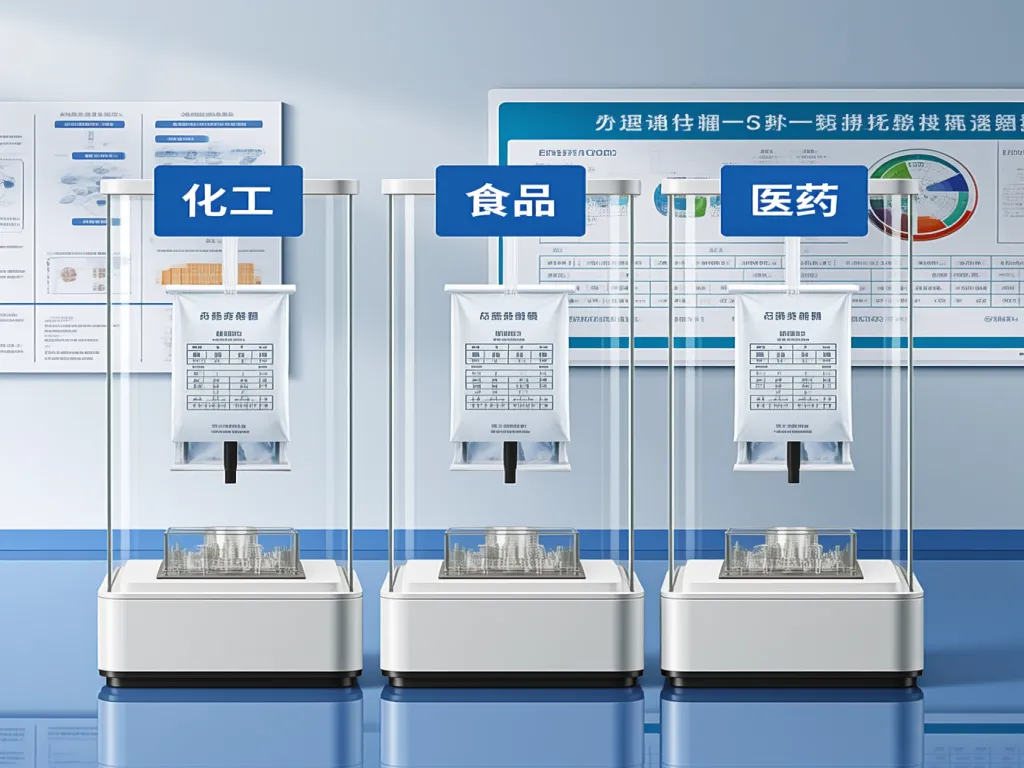
When it comes to industrial filtration, the demands vary significantly across different sectors. Each industry—be it chemical processing, food manufacturing, or pharmaceutical production—has unique requirements that dictate the type of filter bag needed. Understanding these needs is crucial for selecting the right industrial filter bag HS code. Let’s dive into the specifics of each application to help you make an informed choice.
First up, the chemical industry. This sector deals with a wide range of substances, from corrosive liquids to volatile gases. The filtration process here must be robust enough to handle harsh chemicals without degrading. For instance, if you’re filtering sulfuric acid, you’ll need a filter bag made from materials like PTFE or polypropylene, which offer excellent chemical resistance. The HS code for such bags typically falls under categories that specify ‘chemical-resistant’ or ‘high-temperature’ filters. But how do you know which HS code to look for? It’s all about understanding the chemical composition of your process stream and matching it with the filter material’s compatibility.
Moving on to the food industry, where hygiene and safety are paramount. Filtration in food processing often involves removing contaminants like dust, bacteria, or even tiny particles that could affect taste or shelf life. Here, filter bags made from food-grade materials like polyester or nylon are preferred. These materials are not only effective in trapping particles but also safe for contact with edible products. When browsing HS codes for food-grade filter bags, look for terms like ‘food-safe’ or ‘FDA-approved’ to ensure compliance with industry standards. For more insights on FDA standards for food-grade materials, you can refer to the official FDA guidelines.
Now, let’s talk about the pharmaceutical industry. Precision is the name of the game here. Pharmaceutical filtration requires filter bags that can capture extremely fine particles, ensuring the purity of the final product. Materials like glass fiber or PTFE membrane are commonly used for their high filtration efficiency and low extractables. The HS code for pharmaceutical-grade filter bags often includes descriptors like ‘sterile’ or ‘ultra-fine filtration’. To select the right HS code, consider the particle size you need to filter and the cleanliness level required for your application.
But wait, there’s more to it than just material and application. The size and shape of the filter bag also play a role. For example, in a high-flow chemical process, you might need a larger bag with a higher surface area to maintain filtration efficiency. Conversely, in a compact food processing line, a smaller, more flexible bag might be ideal. The HS code will reflect these specifications, so pay attention to terms like ‘bag dimensions’ or ‘flow rate capacity’ when making your selection.
So, how do you bring all this together to choose the perfect industrial filter bag HS code? Start by identifying your industry’s specific filtration needs. What are you filtering? What are the environmental conditions? What compliance standards must you meet? Once you have a clear picture, you can narrow down your HS code search to products that match those criteria. Remember, the right HS code isn’t just a number—it’s a gateway to finding the filter bag that will keep your operations running smoothly and efficiently.
Chemical Industry Filtration Needs
In the chemical industry, filtration isn’t just about removing impurities—it’s about ensuring safety and process integrity. Chemicals can be corrosive, abrasive, or even toxic, so your filter bag must withstand these challenges. PTFE filter bags, for instance, are a popular choice due to their exceptional chemical resistance and high-temperature tolerance. When selecting an HS code for chemical filtration, look for descriptors like ‘chemical-resistant’, ‘high-temperature’, or ‘corrosive-resistant’. These terms will guide you to filter bags designed specifically for harsh chemical environments.
Food Industry Filtration Requirements
The food industry demands filtration solutions that are both effective and safe. Contaminants in food processing can range from visible debris to microscopic bacteria. Polyester or nylon filter bags are often used here because they’re durable, easy to clean, and meet food safety standards. When browsing HS codes for food-grade filters, focus on terms like ‘food-safe’, ‘FDA-compliant’, or ‘hygienic’. These indicators ensure that the filter bag you choose won’t compromise the quality or safety of your food products.
Pharmaceutical Industry Filtration Precision
Precision is everything in pharmaceutical filtration. Even the smallest particle can affect the efficacy or safety of a drug. Glass fiber or PTFE membrane filter bags are commonly used for their ability to capture fine particles with high efficiency. When selecting an HS code for pharmaceutical filters, look for descriptors like ‘sterile’, ‘ultra-fine’, or ‘low extractables’. These terms signal that the filter bag meets the stringent standards required for pharmaceutical applications.
Real-World Success Stories: Maximizing Efficiency and Minimizing Costs with Precise HS Code Selection
Let’s dive into some real-world examples that illustrate how businesses have leveraged precise HS code selection for industrial filter bags to achieve remarkable results in terms of both filtering efficiency and cost-effectiveness. Imagine a mid-sized chemical processing plant struggling with high operational costs due to frequent filter bag replacements. Initially, they were using a generic filter bag classified under a broad HS code, which didn’t cater specifically to their corrosive chemical environment. This led to rapid degradation and increased downtime for replacements. Realizing the need for a more tailored solution, they consulted with a filter bag specialist who recommended a specific HS code classification designed for harsh chemical environments. The new filter bags, made from a corrosion-resistant material and precisely classified, not only extended the lifespan significantly but also improved the overall filtering efficiency. The result? A drastic reduction in replacement costs and downtime, leading to substantial savings and enhanced operational efficiency. Now, let’s shift our focus to the food processing industry. A large-scale dairy plant was facing challenges in maintaining the purity of its products due to inadequate filtration. Their existing filter bags, though effective to some extent, were not optimized for the fine particulates present in dairy processing. By consulting with experts and selecting a filter bag with a precise HS code classification tailored for dairy applications, they were able to achieve a much higher level of filtration. This not only improved product quality but also reduced waste and enhanced the plant’s reputation for producing high-quality dairy products. The cost savings came from reduced product rejections and improved yield, proving that the right HS code selection can have a profound impact on both the top and bottom lines. Another compelling case comes from the pharmaceutical sector. A pharmaceutical manufacturer was dealing with strict regulatory requirements for air purity in their production facilities. Their existing filter bags, though compliant to some extent, were not meeting the stringent standards required for pharmaceutical-grade air filtration. By selecting a filter bag with a precise HS code classification designed for pharmaceutical applications, they were able to achieve compliance with ease. The new filter bags not only met but exceeded the regulatory standards, ensuring a sterile production environment. The cost benefits were twofold: reduced risk of product contamination and associated recalls, and improved operational efficiency due to fewer interruptions for filter bag replacements. These examples underscore the importance of precise HS code selection in industrial filter bag applications. By understanding the specific requirements of your industry and selecting a filter bag with the right HS code classification, you can achieve optimal filtering efficiency while minimizing costs. It’s not just about choosing a filter bag; it’s about choosing the right filter bag for your unique needs. So, how can you ensure you’re making the right choice? Start by conducting a thorough analysis of your filtration needs, considering factors such as the type of contaminants, flow rates, and environmental conditions. Then, consult with experts who can guide you through the HS code classification system and recommend the most suitable filter bag for your application. Remember, the right HS code selection can be the difference between average performance and exceptional results.
Case Study 1: Chemical Processing Plant
In the chemical processing industry, where corrosive substances are prevalent, selecting the right filter bag is crucial. A chemical plant initially used a generic filter bag, leading to rapid degradation and high replacement costs. By switching to a filter bag with a precise HS code classification for corrosive environments, they achieved longer lifespan, improved filtration efficiency, and significant cost savings. This case highlights the importance of matching the filter bag material and HS code to the specific chemical environment.
Case Study 2: Dairy Processing Plant
For dairy processors, maintaining product purity is paramount. A dairy plant struggled with inadequate filtration, leading to product quality issues. By selecting a filter bag with a precise HS code classification for dairy applications, they improved filtration efficiency, reduced waste, and enhanced product quality. The cost savings came from fewer product rejections and improved yield, demonstrating the value of tailored HS code selection in the food industry.
Case Study 3: Pharmaceutical Manufacturer
In the pharmaceutical sector, where air purity is critical, selecting the right filter bag is essential for compliance and product safety. A pharmaceutical manufacturer faced challenges meeting regulatory standards with their existing filter bags. By choosing a filter bag with a precise HS code classification for pharmaceutical applications, they achieved compliance, reduced contamination risks, and improved operational efficiency. This case underscores the importance of HS code selection in ensuring regulatory compliance and product quality.
To wrap up, mastering the HS codes for industrial filter bags is your key to unlocking efficient and cost-effective filtration solutions. By understanding the basic classifications, aligning them with your application’s unique demands, and learning from real-world examples, you’re well-equipped to make informed choices. Remember, the right HS code means the right filter bag—leading to optimal performance and savings. Ready to take your filtration game to the next level? Dive deeper into our resources and discover how precise HS code selection can transform your industrial processes. The journey to flawless filtration starts now!