
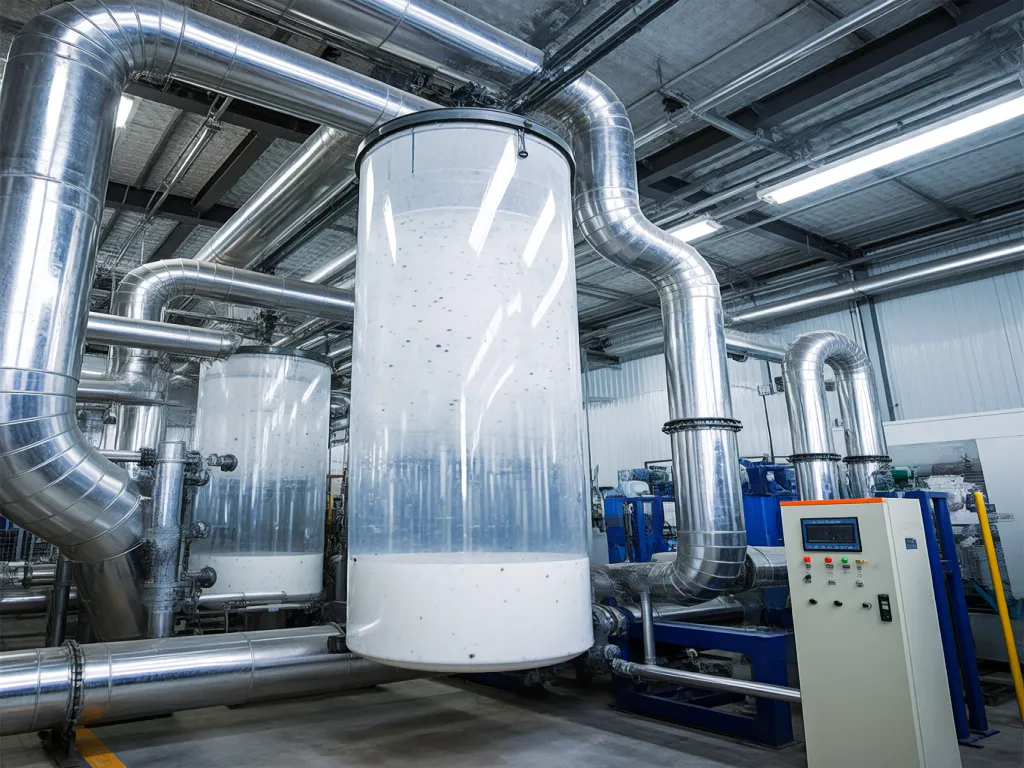
Industrial large capacity filter sacks in factory setting

When it comes to industrial filtration, the choice between small and large capacity filter sacks can make or break your production efficiency. Imagine handling massive volumes of liquid or gas daily—how do you ensure your filtration system keeps up without compromising quality? This is where large capacity filter sacks step in, offering a balance between speed, volume, and precision. But how do you know which size is right for your needs? Let’s dive into the specs and strategies that will help you make an informed decision.

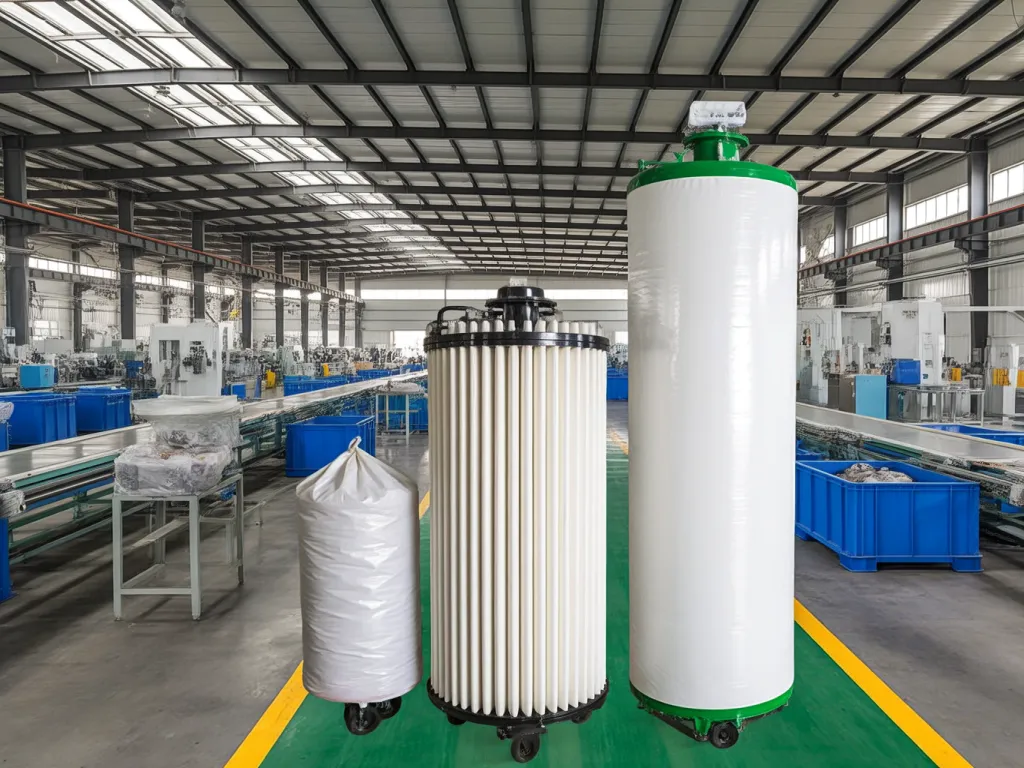
Large capacity filter sacks and filter cartridges in factory

Capacity vs. Efficiency: Choosing the Right Large Capacity Filter Sacks for Your Needs

When it comes to industrial filtration, the choice between small and large capacity filter sacks can significantly impact your production efficiency and operational costs. As a purchasing manager or production supervisor, you’re constantly balancing the need for high throughput with the constraints of budget and space. So, how do you decide which size is right for your operation? Let’s dive into the differences between small and large capacity filter sacks in terms of filtration speed and processing volume, and explore how to select the perfect fit based on your production demands.

First, let’s clarify what we mean by ‘small’ and ‘large’ capacity. Generally, small capacity filter sacks are designed for lower volume applications, where the flow rate and particulate load are relatively low. On the other hand, large capacity filter sacks are built to handle higher volumes, with faster flow rates and greater particulate loads. The key difference lies in their ability to process material efficiently over time.

When it comes to filtration speed, large capacity filter sacks often have the upper hand. Their larger surface area allows for more particulate to be captured per unit of time, resulting in faster filtration rates. This means that, in high-volume production environments, a large capacity filter sack can keep up with the demand, reducing downtime and increasing overall productivity. However, it’s important to note that filtration speed isn’t the only factor to consider. The type of particulate being filtered, the viscosity of the fluid, and the desired level of filtration all play a role in determining the optimal speed.

Now, let’s talk about processing volume. Large capacity filter sacks excel in scenarios where large quantities of material need to be filtered continuously. Their ability to hold more particulate before requiring replacement or cleaning means fewer interruptions to your production process. This is particularly beneficial in industries like chemical processing, food and beverage, and pharmaceuticals, where uninterrupted production is crucial for maintaining quality and meeting deadlines. Small capacity filter sacks, while suitable for lower volume applications, may require more frequent changes, leading to increased labor costs and potential downtime.

So, how do you decide which capacity is right for your operation? Start by assessing your production needs. Consider the volume of material you need to filter per hour or day, the type of particulate you’re dealing with, and the desired level of filtration. If you’re operating in a high-volume environment with stringent quality requirements, a large capacity filter sack is likely your best bet. However, if your production volume is lower or you have space constraints, a small capacity filter sack may be more appropriate.

It’s also worth considering the long-term costs associated with each option. While large capacity filter sacks may have a higher upfront cost, their ability to reduce downtime and increase productivity can lead to significant savings over time. Conversely, while small capacity filter sacks may seem more cost-effective initially, the increased labor and potential downtime costs can add up quickly.

In conclusion, the choice between small and large capacity filter sacks is not a one-size-fits-all decision. It requires a careful assessment of your production needs, the type of particulate being filtered, and the desired level of filtration. By understanding the differences in filtration speed and processing volume, and considering the long-term costs, you can make an informed decision that will enhance your production efficiency and reduce operational costs.

Filtration Speed: The Need for Speed in High-Volume Environments

In high-volume production settings, the speed at which your filter sacks can process material is crucial. Large capacity filter sacks, with their expansive surface area, are designed to capture more particulate per unit of time, resulting in faster filtration rates. This means that, in environments where time is of the essence, a large capacity filter sack can keep up with the demand, ensuring that your production line runs smoothly and efficiently. However, it’s essential to balance speed with the quality of filtration. Sometimes, a slower but more thorough filtration process may be necessary to achieve the desired level of purity.

Processing Volume: Handling Large Quantities with Ease

When it comes to processing large quantities of material, large capacity filter sacks shine. Their ability to hold more particulate before requiring replacement or cleaning means fewer interruptions to your production process. This is particularly important in industries where continuous production is essential for maintaining quality and meeting deadlines. Small capacity filter sacks, while suitable for lower volume applications, may not be able to keep up with the demand in high-volume settings, leading to increased downtime and potential quality issues.

Making the Right Choice: Assessing Your Production Needs

Choosing the right filter sack capacity starts with a thorough assessment of your production needs. Consider the volume of material you need to filter, the type of particulate you’re dealing with, and the desired level of filtration. If you’re operating in a high-volume environment with stringent quality requirements, a large capacity filter sack is likely your best option. However, if your production volume is lower or you have space constraints, a small capacity filter sack may be more appropriate. Remember, the goal is to find a balance between efficiency, cost, and quality.

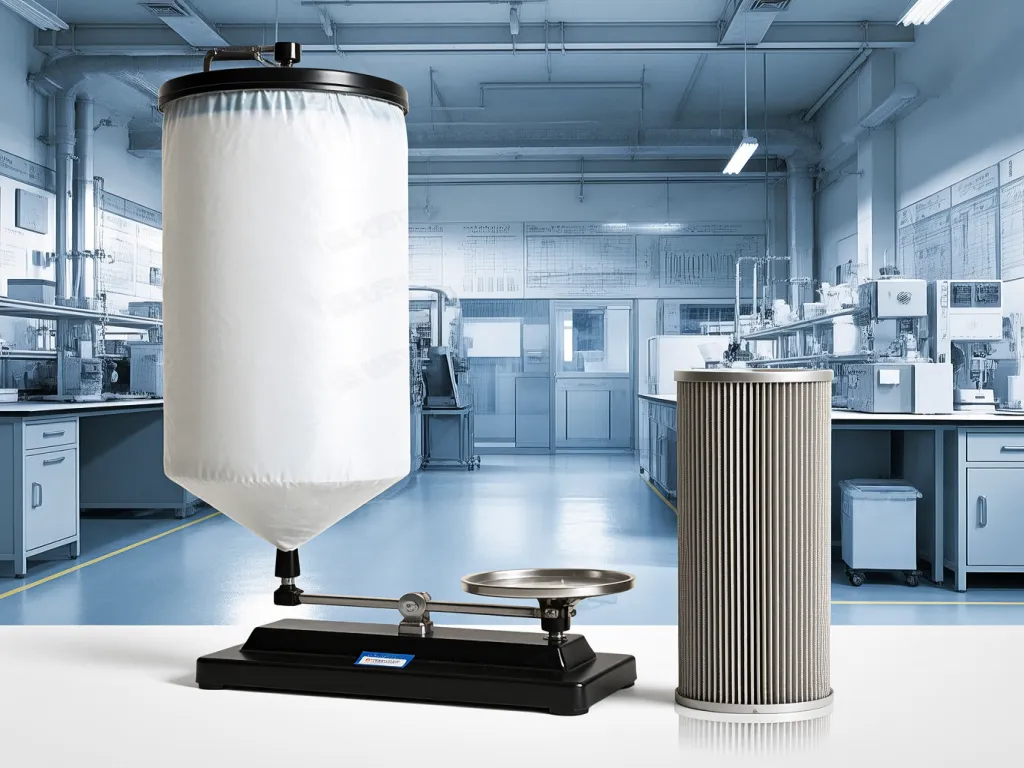
Large capacity filter sack and filter cartridge in lab setting

Capacity vs. Precision: Why Bigger Isn’t Always Better for Filter Sacks

When it comes to large capacity filter sacks, many assume that bigger automatically means better. After all, more capacity should translate to higher throughput and improved efficiency, right? Not so fast. The relationship between capacity and filtering precision is far more nuanced than a simple ‘bigger is better’ equation. Let’s dive into why, in certain industrial scenarios, opting for a massive filter sack might actually compromise your filtration results.

First, let’s clarify what we mean by ‘capacity’ and ‘precision.’ Capacity refers to the volume of material a filter sack can hold before needing replacement or cleaning. Precision, on the other hand, relates to the smallest particle size the filter can effectively capture. These two factors interact in ways that can dramatically affect your system’s performance.

Imagine a scenario where you’re filtering fine particulates from a liquid stream. A high-capacity filter sack with large pores might seem ideal for handling large volumes. However, those wide pores that allow rapid flow also let many small particles pass through unfiltered. The result? Your ‘high-capacity’ solution becomes a low-precision nightmare, with contaminated product and potential downstream equipment damage.

But wait, you might think—can’t we just use a denser filter media in a large sack? Here’s where the physics gets tricky. As filter media becomes finer to improve precision, it inherently reduces flow rates. To maintain throughput with a finer filter, you’d need to increase surface area. Large capacity sacks do offer more surface area than smaller ones, but there’s a limit to how much you can pack in before flow becomes restricted.

Let’s consider pressure differentials. Larger filter sacks typically operate at higher pressures to push fluid through the increased media volume. This pressure buildup can actually compress the filter media over time, reducing pore size and flow rates. What starts as a high-capacity solution might end up clogged and inefficient much faster than expected.

Another critical factor is the nature of your contaminants. For coarse particles, a large-capacity, lower-precision filter works well. But when dealing with submicron particles or emulsions, you need much finer filtration that large sacks struggle to provide consistently.

Think about maintenance cycles too. While large sacks need changing less frequently, when they do require attention, the downtime can be significant. Smaller, more precise filters might need more frequent changes but can often be swapped out faster, minimizing production interruptions.

So how do you strike the right balance? The key lies in understanding your specific process requirements. Ask yourself: What’s the smallest particle size I need to remove? What flow rate does my system require? How much downtime can I afford for filter changes?

In many cases, a modular approach works best—using multiple smaller, high-precision filters in parallel rather than one massive sack. This gives you the flexibility to adjust precision as needed while maintaining throughput.

Remember, filtration isn’t just about removing contaminants—it’s about doing so efficiently without compromising your product quality or system integrity. Sometimes, that means accepting slightly lower capacity for significantly higher precision. The savings in product quality, equipment longevity, and reduced rework often outweigh the minor increase in filter change frequency.

The Pressure Paradox in Large Filters

One often overlooked aspect of large capacity filter sacks is how pressure affects their performance over time. As fluid pushes through the extensive filter media, pressure builds up at the inlet. This increased pressure does two things: first, it forces more fluid through faster (which sounds good), but second, it gradually compresses the filter media.

Compressed media means smaller effective pore sizes. What starts as a filter designed for 10-micron particles might, after weeks of operation, behave more like a 5-micron filter. This compression isn’t uniform either—it tends to be worse near the inlet where pressure is highest. The result? Uneven filtration where some areas capture fine particles while others let them through.

This pressure-induced compression explains why some large filters initially meet specifications but fail quality tests after extended use. It’s not that the filter wore out—it’s that the operating conditions changed its effective precision.

When Smaller Filters Outperform Large Ones

There are specific industrial scenarios where smaller, higher-precision filters consistently outperform their larger counterparts. In pharmaceutical manufacturing, for example, where particle contamination can ruin entire batches, ultra-fine filtration is non-negotiable. Here, multiple smaller filters arranged in series provide superior control over particle size distribution compared to a single large sack.

Similarly, in food and beverage processing, where flavor purity is critical, smaller filters with specialized media can target specific contaminants without affecting product taste. The precision of these filters often matters more than their capacity.

Another case is in semiconductor manufacturing, where even nanometer-scale particles can cause defects. For these applications, large capacity is irrelevant—only the highest precision filtration will suffice, regardless of throughput limitations.

Balancing Throughput and Purity

The ultimate challenge in filter sack selection is balancing throughput requirements with purity standards. Large capacity filters excel when you need to process high volumes of fluid with relatively coarse contaminants. Think wastewater treatment or mineral processing where the goal is bulk separation rather than fine purification.

However, when your process demands both high volume and high purity—such as in chemical manufacturing or paint production—you need a more sophisticated approach. This often involves pre-filtration with larger sacks to remove coarse particles, followed by fine filtration stages with smaller, higher-precision units.

This multi-stage approach recognizes that no single filter type can optimize both capacity and precision simultaneously. By understanding where each filter type excels, you can design a system that delivers both the volume and purity your process requires.

Large capacity filter sacks in industrial plant environment

Case Studies: Efficiency Loss & Cost Increase from Improper Capacity Selection

Choosing the right capacity for large capacity filter sacks is more than just a technical decision—it’s a strategic move that can significantly impact your production efficiency and bottom line. Let’s dive into some real-world scenarios where improper capacity selection led to unexpected challenges and how businesses overcame them.

Scenario 1: The Undercapacity Dilemma
Imagine a chemical processing plant that decided to cut costs by opting for smaller-than-recommended filter sacks. Initially, the cost savings seemed appealing. However, within a few months, the plant faced frequent filter clogging, leading to unplanned downtimes. The smaller sacks couldn’t handle the high volume of particulates, causing the filtration system to work overtime and eventually fail. The result? A 30% drop in production efficiency and a 20% increase in maintenance costs due to frequent replacements and system repairs.

The solution here was straightforward yet impactful: upgrading to larger capacity filter sacks that matched the plant’s production volume. This adjustment not only restored efficiency but also reduced long-term operational costs by minimizing downtime and maintenance needs.

Scenario 2: The Overcapacity Conundrum
On the flip side, a food processing facility invested in oversized filter sacks, believing ‘bigger is better.’ While the sacks could handle the volume, the filtration speed became too slow, causing a bottleneck in the production line. The excess capacity didn’t translate to better performance; instead, it led to a 15% decrease in overall throughput and increased energy consumption as the system struggled to maintain optimal flow rates.

The fix involved downsizing to filter sacks with a capacity that aligned more closely with the facility’s actual needs. This optimization improved filtration speed, reduced energy usage, and enhanced overall production efficiency by eliminating the bottleneck.

Scenario 3: The Precision Predicament
In a pharmaceutical manufacturing setting, precision is paramount. A company chose high-capacity filter sacks without considering the specific particulate size distribution of their raw materials. The result was a compromise in filtration precision, leading to product contamination and recalls. The financial impact was severe, with recall costs and lost customer trust far outweighing any initial savings from the larger sacks.

The key lesson here was the importance of matching filter sack capacity not just to volume but also to the specific characteristics of the materials being filtered. By switching to filter sacks designed for their precise particulate size, the company restored product quality, avoided further recalls, and rebuilt customer confidence.

These cases highlight a critical truth: the ‘right’ capacity for large capacity filter sacks isn’t a one-size-fits-all answer. It requires a deep understanding of your production processes, material characteristics, and long-term operational goals. So, how do you ensure you’re making the right choice? Start by conducting a thorough assessment of your production needs, including volume, particulate size, and filtration speed requirements. Then, consult with experts who can guide you toward the optimal capacity solution tailored to your unique situation.

Remember, the goal isn’t just to avoid problems—it’s to maximize efficiency, reduce costs, and ensure consistent product quality. By choosing the right large capacity filter sacks, you’re not just buying a product; you’re investing in the smooth, efficient operation of your entire production line.

Adjusting and Optimizing Capacity Selection

The journey to finding the perfect large capacity filter sacks doesn’t end with the initial purchase. Continuous monitoring and adjustment are crucial. Implement a system to track filtration efficiency, downtime, and maintenance costs. Use this data to refine your capacity selection over time. For instance, if you notice a gradual increase in downtime, it might indicate that your filter sacks are nearing their capacity limit. Conversely, if your filtration speed is consistently slower than optimal, you might be overcapacity. Regularly reviewing and adjusting your filter sack capacity ensures that you’re always operating at peak efficiency, minimizing costs, and maximizing productivity.

Selecting the right large capacity filter sacks isn’t just about size—it’s about aligning capacity with your production demands for peak efficiency and cost savings. Throughout this guide, we’ve explored how capacity impacts filtration speed, accuracy, and real-world outcomes. Remember, a misstep in sizing can lead to inefficiencies or unnecessary expenses. Ready to optimize your filtration setup? Evaluate your needs carefully, refer to our insights, and take the next step toward smarter, more efficient operations. Curious about other filtration hacks? There’s always more to uncover!

Leave a Reply

Your email address will not be published. Required fields are marked *