
Choosing the right bag filter for liquid filtration can significantly impact the efficiency and longevity of your filtration system. Whether you’re an engineer, plant manager, or procurement specialist, understanding the key factors that influence bag filter performance is crucial. In this guide, we’ll explore filtration efficiency, material compatibility, and flow rate capacity—three essential criteria for selecting a bag filter that meets your industrial needs. Have you ever wondered how the right bag filter can transform your liquid filtration process?

Filtration Efficiency: How Different Filter Media Impact Particle Removal and System Performance
When it comes to choosing the right bag filter for liquid filtration, filtration efficiency is a critical factor that directly affects both particle removal and overall system performance. But what exactly is filtration efficiency, and how do different filter media influence it? Let’s break this down in a way that makes sense for engineers, plant managers, and procurement specialists looking to optimize their liquid filtration systems. Filtration efficiency refers to the ability of a filter to capture and retain particles of a specific size from a liquid stream. It’s typically expressed as a percentage, indicating how much of a given particle size is removed by the filter. For example, a filter with 95% efficiency for 10-micron particles will remove 95% of all particles that are 10 microns or larger from the liquid passing through it. Now, here’s where things get interesting: the type of filter media used in your bag filter plays a massive role in determining its filtration efficiency. Different materials have unique properties that affect how they interact with particles in the liquid, which in turn impacts both removal rates and system performance. For further insights into how filter media affects filtration performance, refer to this research study. Let’s explore some of the most common filter media options and how they influence filtration outcomes.
Polyester Filter Media: The Workhorse of Liquid Filtration
Polyester is one of the most widely used filter media in bag filters for liquid applications, and for good reason. It offers excellent chemical resistance, making it suitable for a broad range of industrial fluids. But how does it perform in terms of filtration efficiency? Polyester provides high particle retention capabilities, especially for medium to large particles (typically above 5 microns). Its surface structure creates a physical barrier that traps particles as they pass through, delivering consistent removal rates. For applications where you need reliable performance without extreme precision, polyester is often an excellent choice. It’s also cost-effective, which makes it popular for high-volume filtration needs. However, polyester may not be the best option if you’re dealing with very fine particles or require absolute filtration efficiency for critical processes. For detailed data on polyester filter performance, see this document.
Polypropylene Filter Media: When Chemical Resistance Meets Efficiency
Polypropylene is another common filter media, particularly valued for its exceptional chemical compatibility. It can withstand a wide pH range and is resistant to many solvents, acids, and bases. But what about its filtration efficiency? Polypropylene excels at capturing fine particles, often achieving higher efficiency ratings than polyester for sub-micron particles. Its fibrous structure creates multiple layers of filtration, trapping particles at different stages as the liquid flows through. This multi-stage approach enhances overall removal rates while maintaining good flow characteristics. If your application involves corrosive liquids or requires filtration of very small particles, polypropylene might be your ideal choice. It’s commonly used in pharmaceuticals, food processing, and chemical manufacturing where both purity and chemical resistance are paramount. For more information on polypropylene filtration mechanisms, check out this scientific article.
Nylon Filter Media: Strength and Precision Combined
Nylon filter media offers a unique combination of strength and filtration precision. It’s known for its high tensile strength, which means it can withstand significant pressure differentials without breaking down. But how does this translate to filtration efficiency? Nylon provides excellent particle retention across a wide particle size range, from coarse to fine. Its smooth surface reduces the likelihood of particle embedding, which can help maintain consistent flow rates over time. This makes nylon particularly effective for applications where you need both high efficiency and long service life. You’ll often find nylon used in paint and coating industries, as well as in applications involving abrasive fluids where durability is as important as filtration performance. For a technical comparison of nylon with other media, refer to this research paper.
PTFE (Teflon) Filter Media: The Ultimate in Chemical Resistance and Efficiency
For the most demanding liquid filtration applications, PTFE (commonly known as Teflon) filter media stands out. It offers unmatched chemical resistance, handling virtually any chemical you might encounter in industrial processes. But PTFE isn’t just about chemical compatibility—it also delivers exceptional filtration efficiency. Its hydrophobic nature makes it ideal for filtering aqueous solutions where you need to prevent water absorption. PTFE filters can achieve extremely high efficiency ratings, often capturing particles well below 1 micron in size. This level of precision comes at a cost, though—PTFE filters are typically more expensive than other media options. They’re best reserved for applications where absolute filtration is required, such as in semiconductor manufacturing or ultra-pure water systems. For an in-depth analysis of PTFE filtration properties, see this study.
How Filter Media Affects System Performance Beyond Particle Removal
While filtration efficiency is crucial, it’s not the only factor to consider when evaluating how different filter media impact system performance. The choice of media also influences pressure drop, flow rates, and overall operational costs. For example, a highly efficient media like PTFE might provide excellent particle removal but could also create significant pressure drop if not properly sized for your system. This could lead to increased energy consumption as pumps work harder to maintain flow. On the other hand, a less efficient media like standard polyester might offer lower initial pressure drop but require more frequent replacement as it becomes clogged with particles, increasing long-term operational costs. The key is finding the right balance between filtration efficiency and system performance for your specific application. This often involves considering factors like the desired particle removal rate, acceptable pressure drop, fluid viscosity, and maintenance intervals. For practical guidance on optimizing system performance, refer to this technical resource. By understanding how different filter media affect these variables, you can make an informed decision that optimizes both filtration performance and system efficiency.
Examine Material Compatibility: How to Choose a Bag Filter for Chemical and Operational Resilience
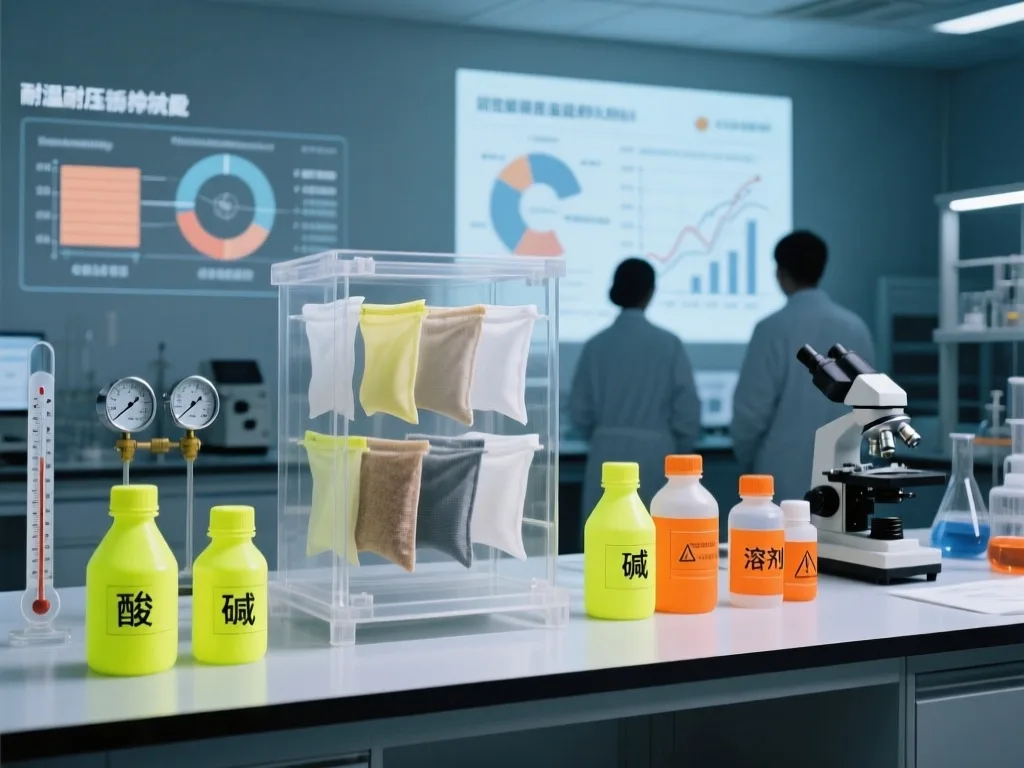
When it comes to selecting a bag filter for liquid filtration, one of the most critical factors is ensuring material compatibility with the specific chemicals and operating conditions in your system. Why is this so important? Because choosing the wrong material can lead to filter failure, contamination, and even safety hazards. So, how do you navigate this complex landscape and make the right choice? Let’s break it down step by step. First, you need to understand the chemical composition of the liquids you’re filtering. Are they acidic, alkaline, or neutral? Do they contain solvents, oils, or other aggressive substances? Each chemical has unique properties that can react differently with filter materials. For example, polypropylene is a common choice for many applications because it’s resistant to a wide range of chemicals, including acids and alkalis. However, it may not hold up well against strong oxidizing agents or certain solvents. On the other hand, materials like nylon or polyester might offer better resistance in specific scenarios but could degrade under other conditions. Next, consider the operating temperature and pressure of your system. Some materials can withstand high temperatures, while others may become brittle or lose their structural integrity. Similarly, pressure ratings vary across different filter materials. If your system operates under high pressure, you’ll need a bag filter made from a material that can handle that without bursting or leaking. But it’s not just about the filter material itself—you also need to think about the construction of the bag filter. How are the seams sealed? Are there any coatings or treatments applied to enhance chemical resistance? These factors can significantly impact the filter’s performance and longevity in harsh environments. Another key consideration is the potential for chemical interactions between the filter material and the liquids being filtered. Some chemicals can cause the filter material to swell, shrink, or even dissolve over time. This not only affects filtration efficiency but can also lead to particle shedding, which contaminates your product stream. To avoid this, it’s essential to conduct thorough compatibility testing or consult with manufacturers who can provide detailed material compatibility charts and recommendations, such as those found in this technical guide. Additionally, don’t overlook the importance of regulatory compliance and safety standards. Depending on your industry, there may be specific requirements for materials used in liquid filtration systems. For instance, in food and beverage processing, filters must meet strict hygiene standards and be made from food-grade materials. Similarly, in pharmaceutical applications, filters must be validated for purity and sterility. By choosing a bag filter that meets these standards, you can ensure compliance and avoid costly fines or recalls. So, how do you put all this information together and make an informed decision? Start by identifying the key chemicals and operating conditions in your system. Then, research filter materials that are known to be compatible with those substances. Consult with manufacturers, read technical data sheets, and consider conducting your own compatibility tests if necessary. Remember, the goal is to find a bag filter that not only removes particles effectively but also withstands the specific challenges of your application without compromising performance or safety.
Understanding Chemical Resistance in Filter Materials
Chemical resistance is a fundamental property when selecting a bag filter for liquid filtration. Different materials react differently to various chemicals, and understanding these interactions is crucial for avoiding filter degradation or failure. For example, polypropylene is widely used due to its excellent resistance to acids, alkalis, and most organic solvents. However, it may not be suitable for applications involving strong oxidizing agents like chlorine or hydrogen peroxide, which can cause the material to break down over time. Nylon, on the other hand, offers good resistance to alkalis and some organic solvents but may degrade in acidic environments. Polyester is another versatile material that performs well in a range of conditions but can be sensitive to strong alkalis. By evaluating the chemical resistance of each material against the specific substances in your system, you can narrow down your options and choose a filter that will maintain its integrity and performance.
Operating Temperature and Pressure Considerations
The operating temperature and pressure of your liquid filtration system are equally important factors in material selection. Some materials, like polypropylene, can withstand temperatures up to 200°F (93°C) without losing their structural integrity, making them ideal for high-temperature applications. Others, such as nylon, have lower temperature limits and may become brittle or deform under extreme heat. Similarly, pressure ratings vary across materials, with some capable of handling pressures up to 150 psi or more, while others are better suited for lower-pressure systems. When selecting a bag filter, ensure that the material can handle both the temperature and pressure extremes of your application to prevent premature failure or leaks.
Construction and Seam Sealing Techniques
Beyond the base material, the construction of the bag filter plays a significant role in its chemical and operational resilience. How the seams are sealed, for example, can impact the filter’s ability to withstand aggressive chemicals or high pressures. Welded seams are often preferred for their strength and durability, as they create a seamless bond that minimizes the risk of leaks or particle shedding. Some manufacturers also apply coatings or treatments to enhance chemical resistance or reduce the potential for static buildup, which can be critical in certain applications. When evaluating bag filters, pay close attention to these construction details to ensure you’re getting a product that’s built to last.
Analyzing Flow Rate Capacity: Selecting the Right Bag Filter for Your System
When it comes to liquid filtration, ensuring your bag filter can handle the required flow rate without causing pressure drops is crucial. Imagine trying to drink a thick milkshake through a narrow straw—it’s frustrating, inefficient, and can lead to a messy situation. The same principle applies to your filtration system. If your bag filter isn’t designed to accommodate the volume of liquid passing through, you’ll face reduced performance, increased energy consumption, and potential damage to your equipment. So, how do you avoid these issues and choose a bag filter that matches your system’s demands perfectly? Let’s break it down.
Understanding Flow Rate Requirements
First things first, you need to determine your system’s flow rate. This is typically measured in gallons per minute (GPM) or liters per minute (LPM). To get an accurate figure, consider factors like the size of your tank, the pump’s capacity, and the overall volume of liquid being processed. Don’t just rely on theoretical calculations—take real-world measurements during peak operation to ensure you’re accounting for variations in demand. Once you have your flow rate, you can start looking for bag filters that can handle it without causing pressure drops. A good rule of thumb is to choose a filter with a flow rate capacity that exceeds your system’s maximum demand by at least 10-20%. This buffer ensures your system can operate smoothly even under unexpected spikes in demand. For more insights on flow rate calculations, refer to this bag filter flow rate guide.
The Role of Filter Media in Flow Rate Capacity
The type of filter media used in your bag filter plays a significant role in determining its flow rate capacity. Different materials have varying levels of porosity, which affects how easily liquid can pass through. For instance, polyester filters are known for their high flow rates and excellent chemical resistance, making them ideal for applications involving corrosive liquids or high-volume processing. On the other hand, nylon filters offer superior particle retention but may have slightly lower flow rates due to their denser structure. When selecting a filter media, consider the balance between flow rate and filtration efficiency. If your application requires high flow rates, opt for a more porous material like polyester. If particle retention is your top priority, a denser material like nylon might be more suitable. Remember, the goal is to find a filter that meets both your flow rate and filtration needs without compromising performance.
Pressure Drop and Its Impact on System Performance
Pressure drop is another critical factor to consider when selecting a bag filter. It refers to the reduction in pressure as liquid flows through the filter, and it’s directly influenced by the filter’s design, material, and condition. A high-pressure drop can lead to reduced flow rates, increased energy consumption, and even system failure. To minimize pressure drop, choose a bag filter with a large surface area and an optimized flow path. This allows liquid to pass through more easily, reducing resistance and maintaining consistent flow rates. Additionally, regular maintenance and timely replacement of clogged filters can help prevent pressure drop from becoming an issue. By keeping your filters clean and in good condition, you ensure your system operates at peak efficiency and avoids unnecessary downtime.
Matching Bag Filter Size to Your System’s Flow Rate
Size matters when it comes to bag filters. A filter that’s too small for your system’s flow rate will struggle to keep up, leading to pressure drops and reduced performance. Conversely, an oversized filter may be unnecessary and more expensive than needed. To find the right size, refer to the manufacturer’s specifications and compare them to your system’s flow rate requirements. Most manufacturers provide detailed charts or calculators that help you determine the appropriate filter size based on your application’s parameters. If you’re unsure, consult with a filtration expert or the manufacturer’s technical support team. They can provide valuable insights and recommendations to ensure you select a bag filter that fits your system perfectly.
Real-World Considerations and Best Practices
While theoretical calculations and manufacturer specifications are important, real-world conditions can vary. Factors like temperature fluctuations, changes in liquid viscosity, and unexpected spikes in demand can all impact your bag filter’s performance. To account for these variables, consider implementing a few best practices. First, conduct regular flow rate tests to monitor your system’s performance and identify any potential issues early on. Second, keep spare filters on hand to ensure quick replacements when needed. Third, train your staff on proper filter maintenance and replacement procedures to minimize downtime and extend the lifespan of your filters. By taking a proactive approach and considering real-world conditions, you can ensure your bag filter operates at peak efficiency and meets your system’s demands consistently.
Selecting the optimal bag filter for liquid filtration requires careful consideration of filtration efficiency, material compatibility, and flow rate capacity. By assessing these factors, you can ensure your system operates smoothly and effectively, reducing downtime and maintenance costs. Remember, the right bag filter not only enhances performance but also extends the lifespan of your filtration system. Are you ready to evaluate your specific needs and make an informed decision? Explore our detailed insights and start optimizing your liquid filtration process today.
n
Need Help Selecting the Right Filter?
Share your application, operating conditions, required efficiency or micron rating, dimensions, and quantity. Our filtration team will help identify a suitable solution.