

Selecting the perfect filter bag material isn’t just a choice—it’s a game-changer for your industrial filtration system’s efficiency and longevity. Ever wondered why some filters outperform others in specific environments? The secret lies in the material. In this guide, we’ll dive deep into How to choose the right filter bag material, comparing properties, industry-specific recommendations, and key factors influencing your decision. Ready to transform your filtration process?
Filter Bag Material Basics: A Comprehensive Comparison
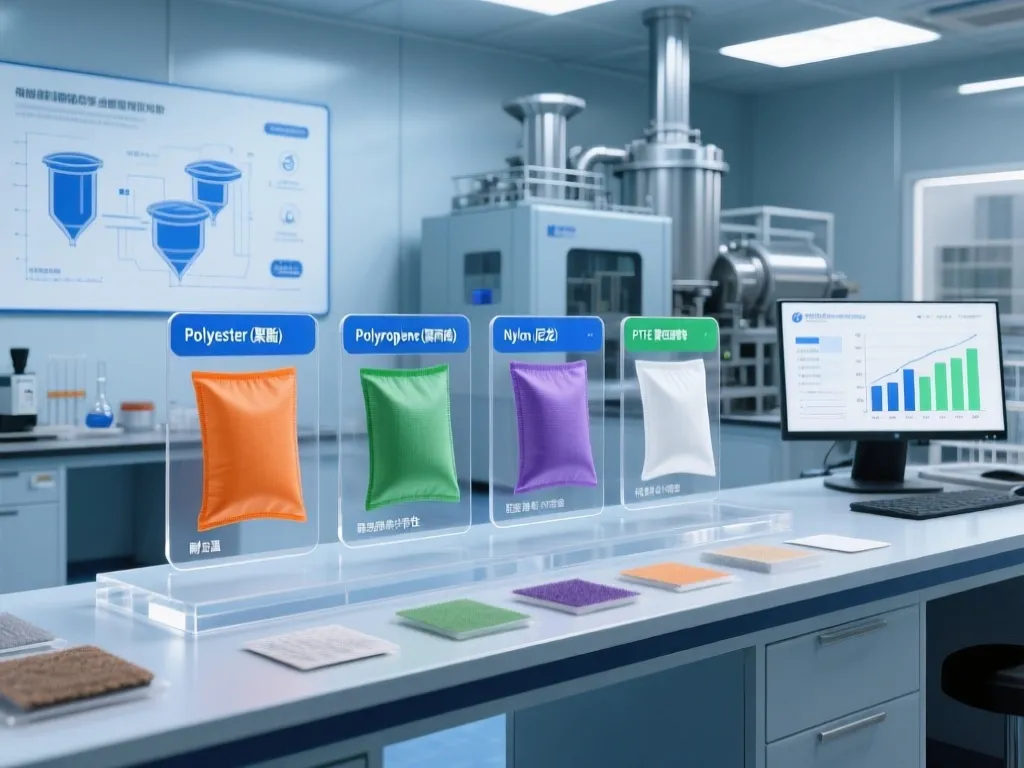
When it comes to industrial filtration, selecting the right filter bag material is crucial. The performance of your filtration system hinges on the material’s ability to withstand various operating conditions. So, how do you choose the right filter bag material? Let’s dive into the basics by comparing some of the most common materials: polyester, polypropylene, nylon, and PTFE (Polytetrafluoroethylene). Each of these materials has unique properties that make them suitable for different applications. By understanding their characteristics, you can make an informed decision that ensures optimal filtration efficiency and longevity. For a deeper understanding of how these materials perform in real-world industrial settings, you may want to explore our range of high-efficiency felt filter bags, which are designed with specific material properties in mind to meet diverse industrial needs.
First up, let’s talk about polyester. Polyester filter bags are widely used due to their excellent chemical resistance and good thermal stability. They can typically handle temperatures up to 130°C (266°F) and are resistant to most acids and alkalis. However, they’re not the best choice for strong oxidizing agents. Polyester bags are also known for their good abrasion resistance, making them ideal for applications involving coarse particles.
Next, we have polypropylene. Polypropylene filter bags are another popular option, especially in industries where chemical resistance is a top priority. They can withstand temperatures up to 90°C (194°F) and are highly resistant to a wide range of chemicals, including acids, alkalis, and organic solvents. One thing to note is that polypropylene is prone to degradation under UV light, so it’s not the best choice for outdoor applications without proper protection. For those seeking a polypropylene solution that can withstand high temperatures, consider our high-temperature-resistant non-woven polyester felt filters, which offer enhanced durability and performance.
Now, let’s shift our focus to nylon. Nylon filter bags are known for their exceptional strength and durability. They can handle temperatures up to 150°C (302°F) and offer good resistance to most chemicals, except for strong acids and oxidizing agents. Nylon’s high tensile strength makes it suitable for applications where the filter bag needs to withstand significant pressure or mechanical stress.
Finally, we come to PTFE. PTFE filter bags are the go-to choice for extreme conditions. They can withstand temperatures up to 260°C (500°F) and are chemically inert, meaning they’re resistant to virtually all chemicals. PTFE is also non-stick, which prevents particles from adhering to the filter bag surface, reducing the risk of clogging and improving filtration efficiency. However, PTFE bags are more expensive than other materials, so they’re typically reserved for high-performance applications where cost is less of a concern. To help you visualize the differences between these materials, here’s a handy table summarizing their key properties:
| Material | Maximum Temperature (°C) | Chemical Resistance | Abrasion Resistance | Tensile Strength | Cost |
|---|---|---|---|---|---|
| Polyester | 130 | Good (except strong oxidizing agents) | Good | Moderate | Low |
| Polypropylene | 90 | Excellent | Moderate | Moderate | Low |
| Nylon | 150 | Good (except strong acids and oxidizing agents) | Excellent | High | Moderate |
| PTFE | 260 | Excellent | Excellent | High | High |
As you can see, each material has its strengths and weaknesses. The right choice for your application will depend on factors like temperature, chemical exposure, abrasion resistance, and budget. By considering these factors and consulting the table above, you can narrow down your options and select the filter bag material that best meets your needs. But wait, there’s more to it than just these basic properties. In the next section, we’ll explore how specific industrial applications influence the choice of filter bag material. Stay tuned!
Choosing the Right Filter Bag Material for Specific Industries: A Practical Guide
When it comes to selecting the right filter bag material, understanding the unique demands of each industry is crucial. Different sectors like chemical, food processing, pharmaceutical, and metallurgy have distinct filtration needs that directly influence material choice. Let’s dive into each industry’s specifics and explore why certain materials outperform others in these environments.
Chemical Industry: Battling Corrosion with Precision
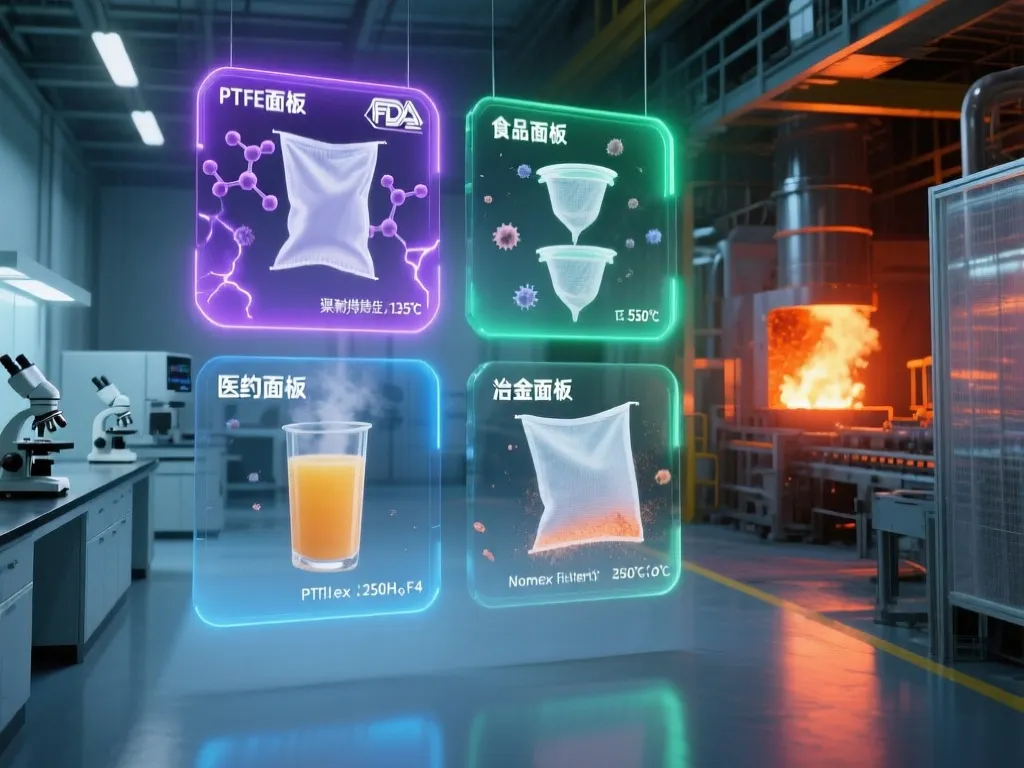
The chemical sector is notorious for its aggressive operating conditions. From highly acidic to alkaline solutions, and extreme temperatures, filter bags here must withstand severe chemical attack while maintaining structural integrity. PTFE (Polytetrafluoroethylene) emerges as a top contender due to its exceptional chemical resistance. It laughs off most acids, bases, and solvents, making it ideal for filtering corrosive chemicals. Moreover, PTFE’s high-temperature tolerance (up to 260°C) ensures it won’t melt or degrade under intense heat. For less extreme but still challenging environments, polypropylene offers good chemical resistance at a lower cost, though it has a lower temperature threshold (around 100°C).
Food Processing: Purity and Safety First
In food manufacturing, hygiene and product purity are non-negotiable. Filter bags must not only capture contaminants effectively but also avoid leaching harmful substances into the food stream. Polyester stands out here for its excellent resistance to mildew, bacteria, and most organic solvents. It’s also FDA-approved for food contact, ensuring safety. For high-temperature sterilization processes, polyester’s ability to withstand up to 135°C without deformation makes it a reliable choice. Additionally, its smooth surface prevents particle adhesion, reducing the risk of bacterial growth and ensuring easy cleaning. For more information on polyester filter solutions, check out our polyester felt filter bag.
Pharmaceutical Industry: Precision Filtration for Critical Products
The pharmaceutical sector demands the utmost precision in filtration. Here, even the slightest contamination can compromise drug efficacy or safety. Nylon filter bags shine in this arena due to their high tensile strength and excellent chemical resistance to most pharmaceutical solvents. They also offer superior particle retention capabilities, crucial for maintaining product purity. For more details on nylon filter cloth, visit our nylon filter cloth page. For sterile applications, PTFE’s non-stick properties and high-temperature resistance make it ideal for filtering sterile solutions or gases, ensuring no microbial contamination occurs during filtration.
Metallurgy: Withstanding the Heat and Abrasion
Metallurgical processes involve high temperatures, abrasive particles, and often, corrosive environments. Filter bags in this sector must be robust enough to handle these harsh conditions without failing. Aramid fibers, such as Nomex, excel in metallurgical applications. Their inherent heat resistance (up to 250°C) and excellent abrasion resistance make them perfect for filtering hot metal dust or slag. For even more extreme temperatures, glass fiber filter bags can withstand up to 550°C, though they require careful handling due to their brittleness. When chemical corrosion is also a concern, PTFE-coated aramid or glass fiber bags offer the best of both worlds: heat and chemical resistance. For high-efficiency felt filter options, explore our felt filter and non-woven polyester felt products.
Factors Affecting Filter Bag Material Selection: A Detailed Exploration
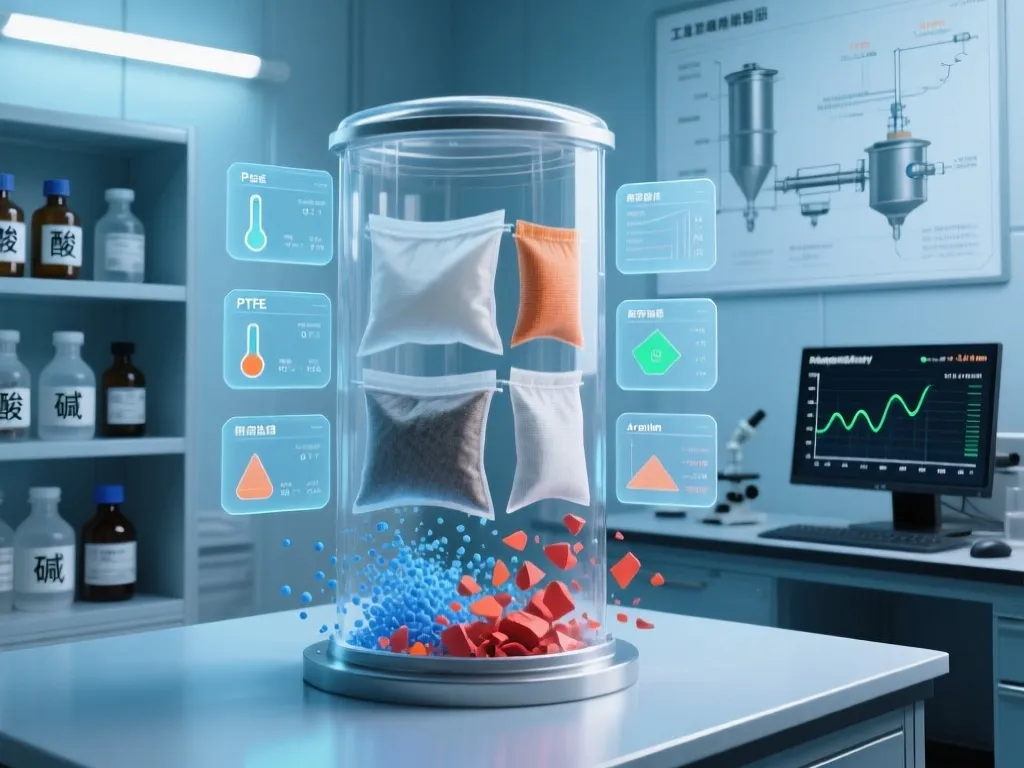
When it comes to selecting the right filter bag material, several critical factors come into play. Understanding these factors is essential to ensure optimal performance, longevity, and cost-effectiveness of your industrial filtration system. Let’s dive deep into the key considerations: temperature, pressure, chemical corrosion resistance, particle size, and shape. Temperature Resistance: The operating temperature of your filtration system is a primary determinant in filter bag material selection. Different materials have varying temperature thresholds. For instance, polyester filter bags, such as the polyester felt filter bag, can typically withstand temperatures up to 150°C (302°F), making them suitable for many moderate-temperature applications. On the other hand, PTFE (Polytetrafluoroethylene) filter bags boast an impressive temperature resistance up to 260°C (500°F), ideal for high-temperature environments. But how do you determine the right temperature resistance for your needs? Start by assessing the maximum operating temperature of your system. Always choose a material with a temperature rating slightly higher than your maximum operating temperature to account for any unexpected spikes. Pressure Considerations: Pressure is another crucial factor. The pressure differential across the filter bag can impact its structural integrity and filtration efficiency. High-pressure applications demand materials with robust mechanical strength. Nylon filter bags, known for their excellent tensile strength, can handle higher pressures compared to polyester or polypropylene. To assess pressure requirements, consider the maximum pressure differential your system will experience. Consult the manufacturer’s specifications for the filter bag material to ensure it can withstand the anticipated pressures without compromising performance. Chemical Corrosion Resistance: Chemical compatibility is vital, especially in industries like chemical processing, pharmaceuticals, and wastewater treatment. The filter bag material must resist degradation from the chemicals present in the process stream. For example, polypropylene filter bags offer good resistance to a wide range of acids and alkalis, making them a popular choice in chemically aggressive environments. PTFE, with its exceptional chemical inertness, is virtually impervious to most chemicals, though it comes at a higher cost. To evaluate chemical resistance, identify the chemicals in your process stream and their concentrations. Refer to chemical compatibility charts provided by filter bag manufacturers to select a material that won’t react with or degrade due to these substances. Particle Size and Shape: The size and shape of the particles being filtered also influence material selection. Fine particles require filter bags with smaller pore sizes to prevent bypass, while larger particles can be effectively captured by materials with larger pores. Additionally, irregularly shaped particles may cause abrasion, necessitating a more abrasion-resistant material like aramid. To determine the appropriate pore size, analyze the particle size distribution of your process stream. For abrasive particles, consider materials with higher abrasion resistance ratings. Manufacturers often provide abrasion resistance data to help you make an informed choice. Practical Tips for Selection: Start by conducting a thorough analysis of your process conditions, including temperature, pressure, chemical composition, and particle characteristics. Consult with filter bag manufacturers or industry experts to understand the capabilities and limitations of different materials. Consider conducting pilot tests with sample filter bags to evaluate their performance in your specific application before making a bulk purchase. By taking these factors into account and following these practical tips, you can confidently select the right filter bag material that meets your industrial filtration needs effectively and efficiently.
Temperature Resistance Considerations
When selecting a filter bag material based on temperature, it’s crucial to consider not just the average operating temperature but also potential temperature fluctuations. Some materials may degrade or lose their filtration efficiency at temperatures close to their upper limits. Therefore, opting for a material with a higher temperature rating than your maximum expected temperature can provide a safety margin and extend the filter bag’s lifespan. For instance, if your system operates at 140°C, choosing a PTFE filter bag rated for 260°C would be a wise decision.
Pressure Differential and Material Strength
Pressure differential across the filter bag can cause it to stretch or even rupture if the material isn’t strong enough. This is particularly important in high-pressure applications like hydraulic systems or compressed air filtration. Nylon filter bags, with their high tensile strength, are often preferred in such scenarios. However, it’s not just about the material’s strength; the construction of the filter bag, including seam strength and overall design, also plays a role in withstanding pressure differentials. For a high-efficiency solution, consider the felt filter designed for such demanding environments.
Chemical Compatibility Challenges
Chemical compatibility is often the most challenging factor to assess, especially in complex process streams with multiple chemicals. In such cases, it’s advisable to conduct compatibility tests with small samples of the filter bag material. Many manufacturers offer chemical compatibility testing services or provide detailed compatibility charts based on extensive testing. Additionally, consider the concentration and temperature of the chemicals, as these can affect the material’s resistance. For a high-temperature-resistant filtration solution, you may explore the non-woven polyester felt filter.
Particle Characteristics and Filtration Efficiency
The size and shape of particles not only influence the choice of pore size but also the filtration mechanism. Fine particles may require a combination of surface and depth filtration, while larger particles can be captured through surface filtration alone. Irregularly shaped particles, like sharp edges or fibers, can cause abrasion or clogging, necessitating a more robust material or a pre-filtration step to remove larger particles before they reach the filter bag. For high-efficiency material suitable for industrial separation, consider the felt filter.
Choosing the right filter bag material is the cornerstone of efficient industrial filtration. By understanding material properties, matching them to your industry’s unique demands, and considering critical factors like temperature and chemical resistance, you’re not just selecting a filter—you’re optimizing your entire operation. Remember, the perfect fit isn’t just about performance; it’s about cost-effectiveness and sustainability too. So, why wait? Dive into our full guide, apply these insights, and watch your filtration system thrive. Want to explore more? Share your thoughts or questions below—let’s keep the conversation going!