

Ever wondered how to pick the ideal filtration bags for your industrial setup? Whether you’re in chemicals, pharmaceuticals, or food processing, the right choice can make or break your filtration system’s efficiency. This guide dives deep into the nuances of selecting filtration bags tailored to your specific industrial scene. Let’s unravel the secrets to achieving precision in filtration and cost-effectiveness in one go!
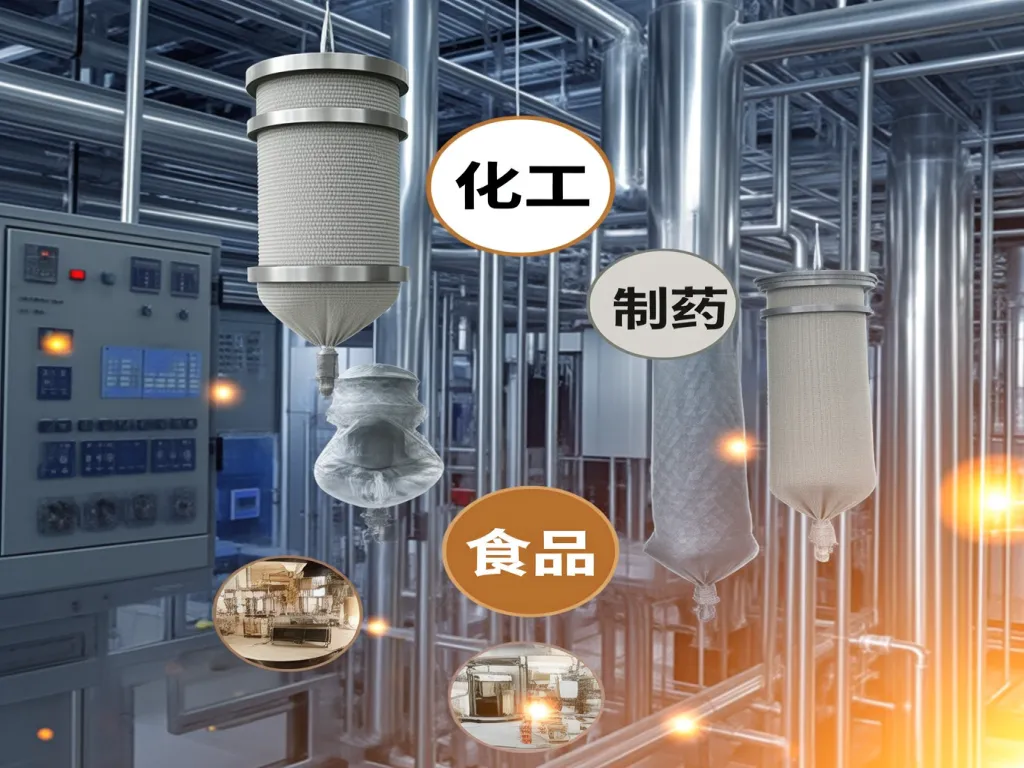
Adapting Filtration Bags to Industrial Scenarios: Precision Matching for Efficient Filtration
When it comes to industrial filtration, the ‘one-size-fits-all’ approach simply doesn’t work. Different industries have unique requirements for filtration bags, shaped by their specific processes, substances being filtered, and environmental conditions. Let’s dive into how the chemical, pharmaceutical, and food processing sectors each demand distinct characteristics from their filtration bags.
Chemical Industry: Battling Corrosion and Extreme Conditions
In the chemical industry, filtration bags are up against some of the toughest challenges. Corrosive chemicals, high temperatures, and varying pressures are the norm. So, what makes a filtration bag suitable for this harsh environment?
Material Matters: Stainless steel or PTFE (PolyTetraFluoroEthylene) are often the go-to materials. Stainless steel offers excellent corrosion resistance and durability, while PTFE is known for its chemical inertness and high-temperature tolerance. These materials ensure that the filtration bag can withstand the aggressive chemicals without degrading.
Precision Filtration: The chemical industry often requires precise filtration to remove specific impurities or particles. This means filtration bags need to have a consistent pore size and high filtration efficiency. Microfiltration or ultrafiltration bags are commonly used, depending on the particle size to be retained.
Temperature and Pressure Tolerance: High-temperature processes are common in the chemical industry, so filtration bags must be able to handle elevated temperatures without losing their structural integrity. Similarly, they should withstand the pressure differentials encountered during filtration. Bags with reinforced seams and high-temperature-resistant materials are essential.
Pharmaceutical Industry: Purity and Compliance are Paramount
In the pharmaceutical sector, the stakes are high. Filtration bags must ensure the purity of the final product, comply with strict regulatory standards, and often handle sensitive or sterile substances.
Material Purity: Polypropylene or polyester are popular choices due to their chemical stability and low extractables. These materials minimize the risk of contaminating the pharmaceutical product, ensuring compliance with Good Manufacturing Practices (GMP).
High-Precision Filtration: The pharmaceutical industry demands extremely high filtration precision to remove even the smallest particles or microorganisms. Nano-filtration or sterile filtration bags are often employed, capable of capturing particles down to the nanometer range.
Sterility and Cleanability: For sterile applications, filtration bags must be autoclavable or sterilizable by other means. They should also be easy to clean and maintain to prevent cross-contamination between batches.
Food Processing Industry: Safety, Taste, and Efficiency
In the food processing industry, filtration bags play a crucial role in ensuring product safety, preserving taste, and improving efficiency. The focus here is on materials that are food-grade, easy to clean, and capable of handling the specific characteristics of food products.
Food-Grade Materials: Nylon or polyester are commonly used for their food-grade properties. These materials are non-toxic, odorless, and tasteless, ensuring they don’t impart any unwanted flavors or contaminants to the food.
Particle Retention and Clarity: Depending on the food product, filtration bags may need to remove solids, clarify liquids, or separate fats. Microfiltration bags are often sufficient for these tasks, providing a balance between filtration efficiency and flow rate.
Ease of Cleaning and Sanitization: Food processing environments require strict hygiene standards. Filtration bags should be easy to disassemble, clean, and sanitize to prevent bacterial growth and ensure food safety. Bags with smooth surfaces and minimal crevices are preferred.
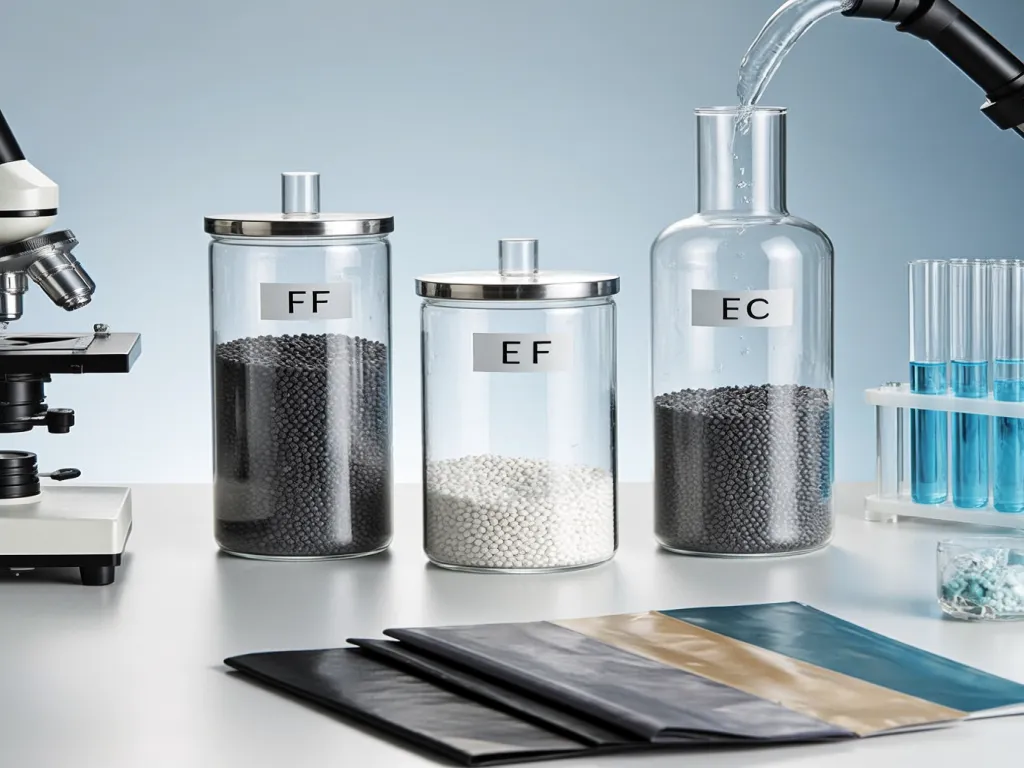
How to Select Filtration Bags Based on Particle Retention Accuracy
Choosing the right filtration bags for your industrial process isn’t just about grabbing the first option you see. It’s a strategic decision that hinges on understanding the specific particle retention accuracy your application demands. Whether you’re dealing with fine dust, liquid impurities, or microscopic contaminants, the filtration level you need will dictate the type of filtration bag you should invest in. Let’s break down the key filtration levels—microfiltration, ultrafiltration, and nanofiltration—and explore how to match them with the perfect filtration bag material.
Microfiltration: The First Line of Defense
Microfiltration (MF) is your go-to when you need to remove larger particles, typically in the range of 0.1 to 10 microns. This level of filtration is common in industries like food and beverage, where clarity and purity are paramount. Imagine trying to filter out sediment from juice or removing yeast cells from beer. Microfiltration bags, often made from materials like polypropylene or polyester, excel here due to their porous structure that allows liquids to pass through while trapping larger solids.
But how do you know if microfiltration is right for you? Ask yourself: Are the particles in my process large enough to be caught by a mesh with relatively large openings? If yes, then microfiltration bags are your cost-effective solution. They’re also great for pre-filtration steps, reducing the load on finer filters downstream and extending their lifespan.
Ultrafiltration: Diving Deeper
Step up to ultrafiltration (UF), and you’re dealing with particles in the 0.001 to 0.1 micron range. This is where things get serious, especially in pharmaceuticals and biotechnology, where even the tiniest impurities can compromise product quality. Ultrafiltration bags are crafted from materials like polysulfone or polyethersulfone, which offer a tighter pore structure capable of intercepting viruses, bacteria, and large macromolecules.
When considering ultrafiltration, think about the purity standards your industry adheres to. If your process requires sterile conditions or the removal of biological contaminants, UF bags are indispensable. They’re also used in water treatment to produce potable water by removing pathogens and organic matter. For more information on the standards and applications of ultrafiltration in water treatment, you can refer to this EPA guide on water purification standards.
Nanofiltration: The Pinnacle of Precision
At the top end of the spectrum lies nanofiltration (NF), targeting particles as small as 0.0001 to 0.001 microns. This is the realm of high-precision filtration, where every nanometer counts. Industries like semiconductor manufacturing and advanced chemical processing rely on nanofiltration to achieve ultra-pure solutions, free from ions, small molecules, and even some salts.
Nanofiltration bags are typically made from specialized materials like thin-film composites, which provide an exceptionally thin and selective membrane layer. Before jumping into nanofiltration, assess whether your process truly necessitates such extreme precision. The cost and complexity are higher, but the payoff is unmatched purity and efficiency in critical applications.
Matching Filtration Levels with Materials
Now that you’ve got a handle on the filtration levels, let’s talk materials. The right material ensures your filtration bag not only meets the particle retention accuracy but also withstands the operational stresses of your process. For microfiltration, polypropylene and polyester are popular for their chemical resistance and durability. Ultrafiltration demands materials like polysulfone for their thermal stability and biocompatibility. And for nanofiltration, thin-film composites reign supreme, offering a balance of permeability and selectivity.
But don’t just take our word for it. Consider the specifics of your process: temperature, pressure, chemical exposure, and flow rates. These factors will influence your material choice. For instance, if you’re filtering hot oils, you’ll need a material that can handle high temperatures without degrading. Similarly, corrosive chemicals require materials with excellent chemical resistance.
Practical Tips for Selection
- Know Your Particles: Start by identifying the size and nature of the particles you need to filter. This will guide you to the appropriate filtration level.
- Consider Process Conditions: Temperature, pressure, and chemical environment play a huge role in material selection. Choose a material that can handle your process without failing.
- Think Long-Term: While upfront costs matter, consider the total cost of ownership. A more expensive bag that lasts longer and performs better can save you money in the long run.
- Consult Experts: Don’t hesitate to reach out to filtration bag manufacturers or suppliers. They can provide valuable insights and recommendations based on your specific needs.
By now, you should have a solid grasp of how to select filtration bags based on particle retention accuracy. Remember, it’s not just about buying a bag; it’s about investing in a solution that enhances your process efficiency, product quality, and bottom line. So, take the time to assess your needs, explore your options, and make an informed decision. Your industrial process deserves nothing less!
Choosing Filtration Bags for Extreme Conditions: High Temperature, High Pressure, and Corrosion Resistance
When it comes to industrial filtration, not all environments are created equal. Some applications demand filtration bags that can withstand extreme conditions—high temperatures, high pressures, or corrosive substances. Choosing the right filtration bags for these harsh environments is crucial for extending their lifespan, reducing replacement frequency, and ultimately achieving long-term cost savings. Let’s break down how to select filtration bags tailored for each of these challenging scenarios.
High-Temperature Environments: Thermal Stability is Key
If your industrial process involves high temperatures, you need filtration bags that won’t degrade, shrink, or lose structural integrity when exposed to heat. Typical materials like polyester or polypropylene might work for moderate temperatures, but for extreme heat, you’ll want to look at specialized materials.
- Aramid Fibers (Nomex, Kevlar): These synthetic fibers are known for their exceptional heat resistance, often withstanding temperatures above 400°F (200°C). They’re commonly used in asphalt production, metal smelting, and power generation.
- PTFE (Teflon) Membranes: PTFE-based filtration bags can handle temperatures up to 500°F (260°C) and are chemically inert, making them ideal for high-temperature chemical processing.
- Fiberglass: With continuous operating temperatures up to 550°F (288°C), fiberglass bags are a go-to for cement kilns, incinerators, and other high-heat applications. For a durable and efficient solution in refinery industries, consider exploring carbon black fiberglass filter bags.
Pro Tip: Always check the maximum continuous operating temperature specified by the manufacturer. Exceeding this limit, even briefly, can cause irreversible damage.
High-Pressure Environments: Strength and Durability Matter
In high-pressure filtration systems, the bags must withstand significant mechanical stress without bursting or tearing. This is especially important in applications like hydraulic fracturing, water treatment, or any process where the filtration system operates under elevated pressure.
- Needle-Felt Materials: These fabrics are mechanically stronger than woven materials and can better resist punctures and abrasions. Polyester needle-felt is a common choice for moderate pressures, while aramid or PTFE needle-felt may be needed for higher pressures.
- Reinforced Seams: Look for filtration bags with reinforced stitching or ultrasonic welding at the seams. This prevents seam failure, which is a common point of weakness under pressure.
- Pressure Ratings: Manufacturers often provide a maximum operating pressure for their filtration bags. Ensure the bag you choose can handle the peak pressures in your system, with a safety margin.
Question to Consider: Have you ever experienced a filtration bag failure due to pressure? If so, was it a seam issue or fabric failure? Understanding past problems can guide your next purchase.
Corrosive Environments: Chemical Resistance is Non-Negotiable
Corrosive substances, whether acidic, alkaline, or solvent-based, can quickly degrade standard filtration materials. Choosing corrosion-resistant filtration bags is essential for longevity and safety in industries like chemical manufacturing, pharmaceuticals, and wastewater treatment.
- PTFE (Teflon) Coated Bags: PTFE is highly resistant to almost all chemicals, making it a top choice for corrosive environments. It’s often used as a coating over a stronger substrate like fiberglass for added durability.
- Polyphenylene Sulfide (PPS): PPS bags resist acids, alkalis, and oxidizing agents, making them suitable for coal-fired power plants and other applications with corrosive flue gases.
- Ryton (Polyphenylene Sulfide): Similar to PPS, Ryton offers excellent chemical resistance and is often used in incinerators and chemical processing.
Real-World Example: A chemical plant once replaced their standard polyester bags with PTFE-coated fiberglass bags after frequent failures due to acid exposure. The new bags lasted over three times longer, drastically reducing downtime and replacement costs.
Putting It All Together: A Holistic Approach
In many industrial settings, you might face a combination of high temperature, high pressure, and corrosion. For example, a power plant’s flue gas treatment system could involve hot, pressurized, and acidic gases. In such cases, a multi-layered approach works best:
- Outer Layer: Choose a material with high thermal stability and chemical resistance (e.g., PTFE-coated fiberglass).
- Inner Layer: Opt for a material that enhances filtration efficiency while resisting abrasion (e.g., PTFE membrane).
- Construction: Ensure reinforced seams and a robust design to handle pressure fluctuations.
For a high-efficiency dust collection solution that can handle such demanding conditions, consider woven fiberglass filter bags.
Final Thought: Investing in high-quality, specialized filtration bags might seem expensive upfront, but the long-term savings in reduced downtime, fewer replacements, and improved process efficiency often outweigh the initial cost. Ask yourself: What’s the true cost of a filtration failure in your operation? The answer might surprise you.
Cost-Benefit Analysis: Long-Term Savings vs. Initial Investment
It’s easy to focus on the sticker price of filtration bags, but the real cost lies in their performance over time. A cheaper bag that fails every six months could end up costing you more in replacements, labor, and process interruptions than a premium bag that lasts for years. Consider conducting a cost-benefit analysis:
- Replacement Frequency: How often do you currently replace bags? What’s the labor cost per replacement?
- Downtime Costs: Every time you replace a bag, your system is offline. How much does an hour of downtime cost your operation?
- Efficiency Loss: As bags degrade, their filtration efficiency drops. Are you losing product quality or increasing waste due to worn-out bags?
By investing in high-performance filtration bags, you’re not just buying a product—you’re buying peace of mind and long-term reliability.
Selecting the right filtration bags is pivotal for industrial filtration success. By understanding your unique industrial demands—be it chemical resistance, temperature tolerance, or precision filtration—you can significantly enhance your system’s performance and longevity. Remember, the perfect filtration bags aren’t just about filtering; they’re about optimizing costs and efficiency. Ready to transform your industrial filtration? Dive deeper into our resources or reach out for personalized advice. The journey to flawless filtration starts now!