

When it comes to maintaining clean indoor air, understanding the efficiency of your air filter is crucial. But what exactly is MERV in air filters, and why does it matter? MERV, or Minimum Efficiency Reporting Value, is a rating system that measures how effectively an air filter captures particles of different sizes. Whether you’re a homeowner, facility manager, or HVAC professional, grasping the science behind MERV ratings can help you make informed decisions about air quality. In this guide, we’ll decode the MERV rating scale, explore its significance in various settings, and provide practical tips for selecting the perfect air filter. Ready to breathe easier? Let’s dive in!

Decoding the MERV Rating Scale: What Each Level Means for Air Quality
When it comes to air filters, you’ve probably heard the term ‘MERV’ thrown around—but what does it really mean? MERV stands for Minimum Efficiency Reporting Value, and it’s the standard rating system used to measure how effectively an air filter captures particles of different sizes. Developed by the American Society of Heating, Refrigerating, and Air-Conditioning Engineers (ASHRAE), the MERV scale ranges from 1 to 20, with higher numbers indicating better filtration performance. But how exactly are these ratings determined, and what do they mean for your indoor air quality? Let’s break it down step by step.
How MERV Ratings Are Determined
The MERV rating isn’t just a random number—it’s based on rigorous testing. Air filters are tested using a method called ASHRAE Standard 52.2, which measures their ability to capture particles of varying sizes, ranging from 0.3 to 10 microns. These particles include common allergens like pollen, dust mites, and mold spores, as well as finer particles like smoke and bacteria. During testing, a known quantity of these particles is introduced into the air stream, and the filter’s ability to capture them is measured at different airflow rates. The results are then compared to a baseline to determine the filter’s efficiency at capturing particles in three size ranges: E1 (0.3 to 1.0 microns), E2 (1.0 to 3.0 microns), and E3 (3.0 to 10 microns). The MERV rating is assigned based on the filter’s worst-case performance across these ranges, ensuring that the rating reflects its minimum efficiency. For more detailed information about the ASHRAE Standard 52.2 testing method, you can refer to the official ASHRAE document here.
What Each MERV Level Signifies
Now that you know how MERV ratings are determined, let’s explore what each level means in terms of filtration efficiency. MERV 1-4 filters are considered low-efficiency and are typically used in residential settings where basic air cleaning is sufficient. These filters can capture larger particles like dust and lint but are ineffective against finer particles like pollen or smoke. MERV 5-8 filters offer moderate efficiency and are suitable for most homes and commercial buildings. They can capture particles as small as 3 microns, including mold spores and pet dander, making them a good choice for improving indoor air quality in standard environments. MERV 9-12 filters are high-efficiency and are often used in hospitals, schools, and offices where better air quality is needed. These filters can capture particles as small as 1 micron, including lead dust and auto emission particles, providing superior protection against allergens and irritants. MERV 13-16 filters are very high-efficiency and are used in specialized settings like surgical suites and cleanrooms. They can capture particles as small as 0.3 microns, including bacteria and viruses, making them ideal for environments where air purity is critical. Finally, MERV 17-20 filters are considered HEPA-level and are used in industries like pharmaceuticals and aerospace, where even the tiniest particles must be removed from the air. For a comprehensive understanding of MERV ratings and their applications, visit the EPA’s guide on MERV ratings.
Why MERV Ratings Matter for Your Air Quality
Understanding MERV ratings is crucial because the right filter can make a significant difference in your indoor air quality. For example, if you suffer from allergies, a MERV 8 filter might not be enough to capture all the pollen and dust mites in your home. Upgrading to a MERV 11 or 12 filter could provide much-needed relief by trapping smaller particles that trigger your symptoms. On the other hand, if you’re a facility manager for a hospital or office building, choosing a filter with a MERV rating that’s too low could compromise the health and safety of occupants. By selecting a filter with the appropriate MERV rating, you can ensure that your indoor air is clean, healthy, and free from harmful contaminants. But remember—higher isn’t always better. Using a filter with a MERV rating that’s too high for your HVAC system can restrict airflow, leading to reduced efficiency and higher energy costs. It’s all about finding the right balance for your specific needs. For more insights into the importance of MERV ratings and their impact on air quality, you can explore the Airmid Health Group’s article.

Significance of MERV Ratings in Different Settings
When it comes to selecting the right air filter, understanding the significance of MERV ratings across different settings is crucial. Whether you’re managing a household, an office, a hospital, or an industrial facility, the MERV rating plays a pivotal role in ensuring optimal air quality tailored to your specific needs. Let’s dive into how MERV ratings impact these diverse environments and what considerations you should keep in mind for each.
MERV Ratings in Homes
For homeowners, the primary goal is often to create a comfortable and healthy living environment. A MERV rating between 8 and 13 is typically sufficient for residential use, capturing common allergens like pollen, dust mites, and pet dander. However, if you or your family members suffer from allergies or respiratory issues, opting for a higher MERV rating, such as 11 or 13, can provide additional protection by trapping finer particles. But remember, higher MERV ratings also mean increased resistance to airflow, so ensure your HVAC system can handle it without compromising efficiency. For a deeper understanding of MERV ratings, refer to this EPA guide on MERV ratings. Have you considered how your current air filter’s MERV rating affects your home’s air quality?
MERV Ratings in Offices
In office settings, maintaining good indoor air quality is essential for employee productivity and well-being. A MERV rating of 8 to 11 is generally suitable for most office environments, effectively capturing dust, mold spores, and some bacteria. However, in open-plan offices or areas with high foot traffic, a higher MERV rating might be necessary to manage increased particulate levels. Additionally, offices with specialized equipment or sensitive processes may require even finer filtration to protect against contaminants. Are you aware of the air quality challenges unique to your office space?
MERV Ratings in Hospitals
Hospitals and healthcare facilities have stringent air quality requirements to prevent the spread of infections and protect vulnerable patients. Here, MERV ratings of 14 or higher are often recommended, capable of capturing viruses, bacteria, and other microscopic particles. In operating rooms and isolation areas, HEPA filters (which can be considered as having a MERV rating of 17 or higher) are typically used to ensure the highest level of air purity. The stakes are high in healthcare settings, so choosing the right MERV-rated air filter is not just a matter of comfort but of patient safety. How does your healthcare facility’s air filtration strategy measure up?
MERV Ratings in Industrial Facilities
Industrial environments present unique challenges when it comes to air filtration. From manufacturing plants to chemical processing facilities, the air can be laden with a wide range of contaminants, including dust, fumes, and volatile organic compounds (VOCs). In these settings, MERV ratings of 14 to 16 are common, providing high-efficiency filtration to protect both workers and equipment. Some industrial processes may even require specialized filters with even higher MERV ratings or additional features like activated carbon for odor and chemical removal. When selecting air filters for industrial applications, it’s crucial to consider the specific contaminants present and the required level of filtration. Are you confident that your industrial facility’s air filters are up to the task?
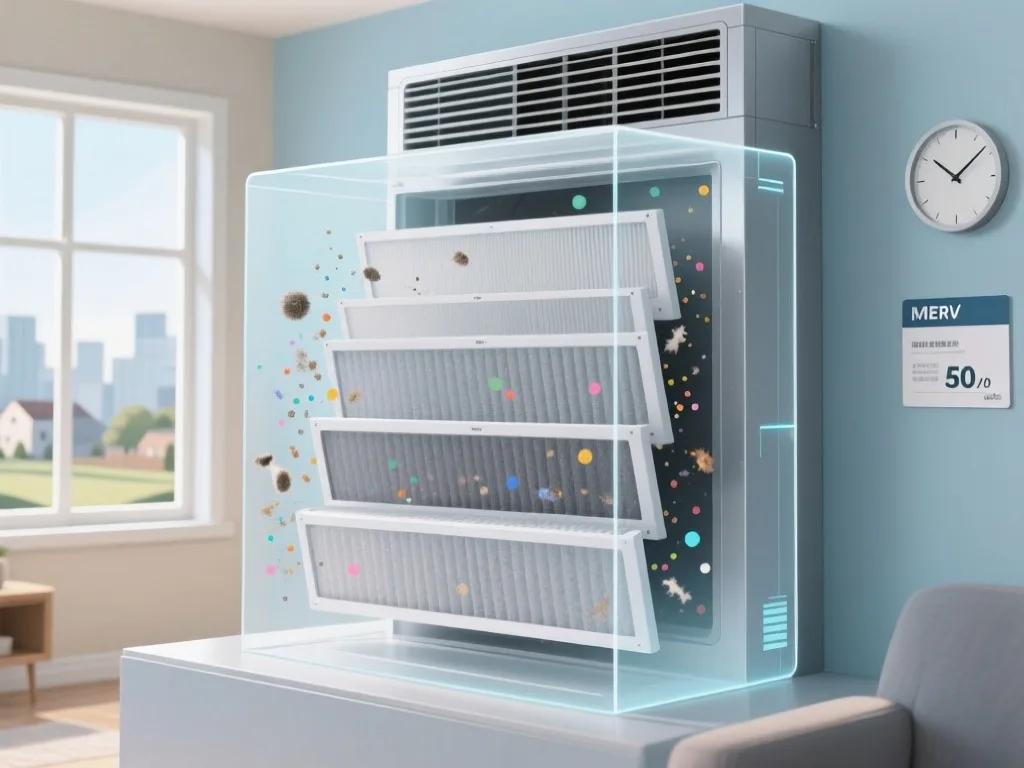
Practical Tips on Choosing the Right MERV-Rated Air Filter
Selecting the perfect MERV-rated air filter isn’t just about picking the highest number you can find—it’s about understanding your specific needs and finding the right balance between efficiency, cost, and maintenance. Let’s break down the key factors you should consider to make an informed decision. First things first, what are your air quality goals? Are you looking to reduce common household allergens like dust mites and pollen? Or do you need to tackle more stubborn particles like mold spores or pet dander? The higher the MERV rating, the more effective the filter is at capturing smaller particles. For instance, a MERV 8 filter is great for general residential use, capturing particles as small as 3 microns. But if you’re dealing with allergies or respiratory issues, you might want to consider a MERV 11 or even a MERV 13 filter, which can trap particles as small as 1 micron. However, it’s important to note that higher MERV ratings also mean more resistance to airflow, which can strain your HVAC system if it’s not designed to handle it. For a deeper understanding of MERV ratings, refer to the EPA’s guide on MERV ratings. So, before you jump to the highest MERV rating, make sure your system can handle it without causing any issues.
Budget Considerations
Budget is another crucial factor when choosing a MERV-rated air filter. Generally, higher MERV-rated filters are more expensive than their lower-rated counterparts. But don’t let price be your only deciding factor. Consider the long-term costs as well. A more expensive filter might last longer or require less frequent replacements, which could save you money in the long run. Plus, investing in a higher-quality filter can lead to better indoor air quality, which can have a positive impact on your health and well-being. So, weigh the initial cost against the potential long-term benefits to make the best decision for your budget.
Maintenance Requirements
Maintenance is another aspect that often gets overlooked when choosing an air filter. Higher MERV-rated filters tend to clog up faster because they’re capturing more particles. This means you’ll need to replace them more frequently to maintain optimal airflow and filtration efficiency. On the other hand, lower MERV-rated filters might not need to be replaced as often, but they also won’t provide the same level of filtration. So, consider how much time and effort you’re willing to put into maintaining your air filter. If you’re someone who prefers a low-maintenance solution, a lower MERV-rated filter might be the way to go. But if you’re willing to put in a little extra effort for cleaner air, a higher MERV-rated filter could be worth it.
Assessing Your HVAC System
Before making a final decision, it’s essential to assess your HVAC system’s capabilities. Not all systems are designed to handle high-MERV filters. Using a filter with a MERV rating that’s too high for your system can restrict airflow, leading to reduced efficiency and potentially even damage to your HVAC equipment. For more detailed information on MERV ratings and their implications, you can explore the Wikipedia page on Minimum Efficiency Reporting Value. So, check your system’s specifications or consult with a professional to determine the maximum MERV rating your system can handle. This will help you narrow down your options and choose a filter that’s both effective and compatible with your system.
Considering Environmental Factors
Environmental factors can also play a role in choosing the right MERV-rated air filter. If you live in an area with high levels of pollution or outdoor allergens, you might need a higher MERV-rated filter to effectively capture these particles and keep them out of your indoor air. Similarly, if you have pets or smoke indoors, a higher MERV-rated filter can help reduce odors and improve air quality. On the other hand, if you live in a relatively clean area with minimal outdoor pollutants, a lower MERV-rated filter might be sufficient.
Understanding what MERV in air filters means is the first step toward achieving optimal indoor air quality. By exploring the MERV rating scale, recognizing its importance in different environments, and considering factors like air quality goals and budget, you can confidently choose the right MERV-rated air filter for your needs. Remember, the right filter not only protects your health but also enhances the efficiency of your HVAC system. So, assess your air filtration needs today and take a step toward cleaner, fresher air. Want to learn more about air filter efficiency? Explore our related guides on MERV vs HEPA filters and the best MERV ratings for residential use.