

When it comes to improving indoor air quality, understanding the meaning behind MERV ratings in air filters is crucial. But what does MERV mean in air filters, and why should it matter to you? Whether you’re a homeowner, facility manager, or health-conscious individual, selecting the right air filter can significantly impact the air you breathe. In this guide, we’ll decode MERV ratings, explain how they’re determined, and help you choose the best filter for your specific needs. Have you ever wondered why some filters seem to work better than others? Let’s dive in and find out.
Decoding MERV Ratings: What They Stand For and How They’re Developed
If you’ve ever shopped for air filters, you’ve probably come across the term MERV—but what does MERV mean in air filters, and why does it matter? MERV stands for Minimum Efficiency Reporting Value, and it’s a standardized rating system developed to help consumers compare the effectiveness of different air filters at capturing particles of various sizes. The MERV rating system was created by the American Society of Heating, Refrigerating, and Air-Conditioning Engineers (ASHRAE) in 1987 to provide a clear, consistent way to measure and report air filter performance. Before MERV, there was no universal standard, making it difficult for consumers and professionals to choose the right filter for their needs. The development of MERV ratings was a game-changer for the industry, offering a reliable metric for evaluating filter efficiency and ensuring better indoor air quality across residential, commercial, and industrial settings. But how exactly are MERV ratings assigned to filters? The process involves rigorous testing methods designed to simulate real-world conditions and measure a filter’s ability to capture particles of different sizes.
The Birth of MERV Ratings: ASHRAE’s Role in Standardization
The MERV rating system was developed by ASHRAE in response to the growing need for a standardized way to measure air filter performance. Before MERV, manufacturers used various methods to rate their filters, leading to confusion and inconsistency in the market. ASHRAE stepped in to create a unified system that would allow consumers and professionals to make informed decisions based on objective data. The goal was to establish a clear, easy-to-understand rating that could be applied to all types of air filters, regardless of brand or design. This standardization has since become the industry benchmark, helping millions of people choose the right filter for their specific needs. For more information on ASHRAE’s standards and contributions, visit their official website: ASHRAE Standard 52.2.
How MERV Ratings Are Assigned: The Testing Process
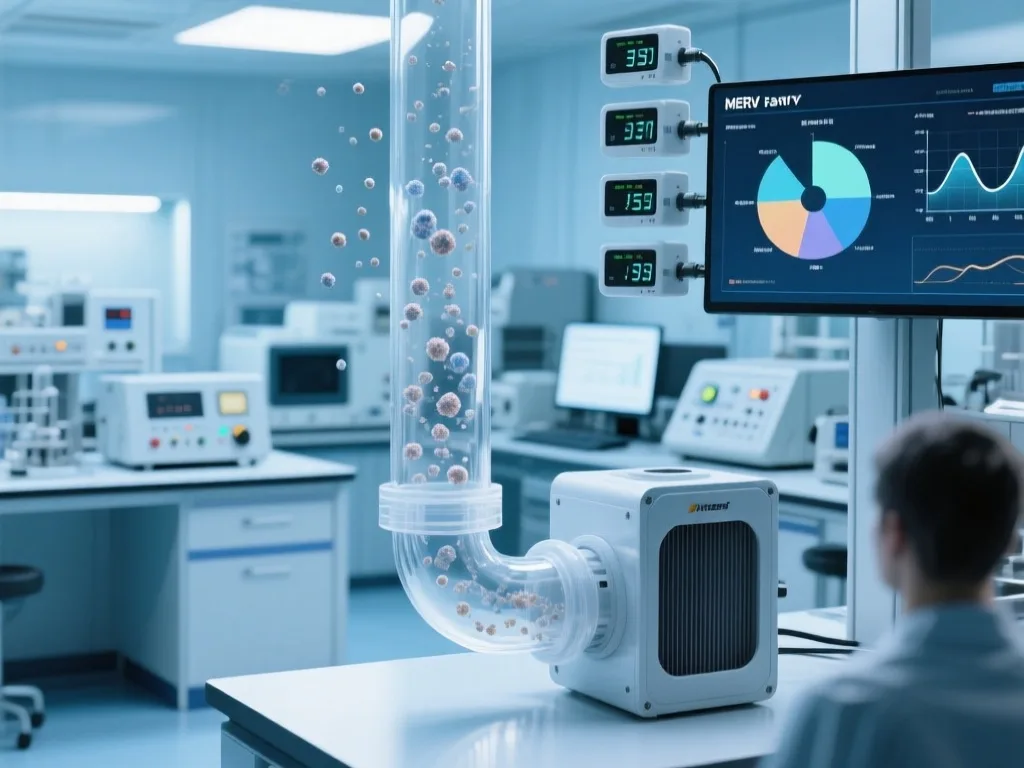
Assigning a MERV rating to an air filter involves a series of controlled tests that measure the filter’s ability to capture particles of different sizes. These tests are conducted in specialized laboratories using standardized equipment and procedures. The process begins by introducing a known quantity of particles into a test duct where the filter is installed. The particles range in size from 0.3 to 10 microns, covering a spectrum that includes common pollutants like dust, pollen, mold spores, and even some bacteria. As air flows through the filter, sensors measure the concentration of particles before and after filtration. The difference in particle counts determines the filter’s efficiency at capturing each size range. This data is then used to calculate the filter’s overall performance, which is assigned a MERV rating based on predefined thresholds.
Understanding the Particle Size Ranges in MERV Testing
The MERV testing process focuses on three key particle size ranges: E1 (0.3 to 1.0 microns), E2 (1.0 to 3.0 microns), and E3 (3.0 to 10.0 microns). These ranges were chosen because they represent the most common indoor air pollutants that affect health and comfort. E1 particles include fine dust, smoke, and even some viruses, while E2 particles cover larger dust particles, pet dander, and mold spores. E3 particles are the largest and include pollen, carpet fibers, and other debris. By testing a filter’s efficiency across these ranges, the MERV rating provides a comprehensive picture of its performance. For example, a filter with a high MERV rating will perform well across all three ranges, capturing a higher percentage of particles at each size.
The Importance of Standardized Testing in MERV Ratings
Standardized testing is crucial for ensuring that MERV ratings are accurate and reliable. Without consistent testing methods, ratings could vary widely between manufacturers, leading to confusion and misinformation. ASHRAE’s testing protocols ensure that every filter is evaluated under the same conditions, using the same equipment and procedures. This consistency allows consumers to compare filters directly, knowing that a MERV 8 filter from one brand will perform similarly to a MERV 8 filter from another. Standardized testing also helps manufacturers improve their products by providing clear benchmarks for performance. Over time, this has driven innovation in the industry, leading to the development of more efficient and effective air filters. For more insights on the importance of standardized testing, refer to the NAFHA guidelines: NAFA Guide to Air Filtration.
Real-World Implications of MERV Ratings: Why They Matter
The MERV rating system has real-world implications for indoor air quality and health. By choosing a filter with the right MERV rating, you can significantly reduce the number of airborne particles in your home or workplace. This is especially important for people with allergies, asthma, or other respiratory conditions, as higher MERV-rated filters can capture more allergens and irritants. For example, a MERV 13 filter can capture up to 90% of particles in the 1.0 to 3.0 micron range, including many common allergens like mold spores and pet dander. On the other hand, a MERV 8 filter might only capture around 70% of these particles, making it less effective for people with severe allergies. Understanding MERV ratings allows you to make an informed decision based on your specific needs and health concerns. For a deeper understanding of MERV ratings and their impact on indoor air quality, visit the EPA’s guide: EPA Guide to MERV Ratings.

MERV Rating Levels and Particle Size Filtration Explained
When it comes to air filters, understanding MERV ratings is crucial for selecting the right filter for your needs. MERV, which stands for Minimum Efficiency Reporting Value, is a standardized rating system that measures how effectively an air filter captures particles of different sizes. The MERV scale ranges from 1 to 20, with higher numbers indicating better filtration capabilities. But what exactly do these numbers mean in terms of particle size filtration? Let’s break down the different MERV rating levels and explore what each one can capture. First, it’s important to note that MERV ratings are assigned based on standardized testing methods. These tests measure a filter’s ability to capture particles of varying sizes, from large dust particles to microscopic allergens and even some bacteria. The testing process involves introducing particles of specific sizes into a controlled airflow and measuring how much of each particle size the filter captures. This data is then used to calculate the filter’s efficiency at capturing particles within different size ranges, resulting in its MERV rating. For a deeper understanding of MERV ratings and their implications, you can refer to the EPA’s guide on MERV ratings. Now, let’s dive into the specifics of each MERV rating level and what it means for particle size filtration.
MERV 1-4: Basic Filtration
Filters with MERV ratings between 1 and 4 offer the most basic level of filtration. These are typically found in residential window air conditioners and basic furnace filters. They can capture larger particles like dust, lint, and some pollen, but they’re not very effective at trapping smaller particles. Particles captured: 10 microns and larger. These filters are suitable for environments where air quality isn’t a major concern, or where the primary goal is to protect HVAC equipment from large debris. However, they won’t do much to improve indoor air quality or reduce allergens.
MERV 5-8: Better Residential Filtration
Filters in the MERV 5-8 range provide better filtration for residential use. They can capture particles as small as 3 microns, including mold spores, pet dander, and some bacteria. Particles captured: 3-10 microns. These filters are a good choice for most homes, especially those with pets or mild allergies. They offer a balance between filtration efficiency and airflow resistance, meaning they won’t put too much strain on your HVAC system while still providing noticeably cleaner air. Many standard furnace filters fall into this MERV range.
MERV 9-12: Superior Residential and Commercial Filtration
Filters rated MERV 9-12 are considered high-efficiency for residential use and are also common in commercial buildings. They can capture particles as small as 1 micron, including lead dust, auto emission particles, and some viruses. Particles captured: 1-3 microns. These filters are ideal for homes with allergy sufferers or those concerned about air quality. They’re also used in commercial settings like offices and retail spaces where maintaining good indoor air quality is important for occupant comfort and health. However, it’s important to note that higher MERV ratings in this range may require more frequent filter changes to maintain optimal performance.
MERV 13-16: Hospital-Grade Filtration
Filters with MERV ratings between 13 and 16 are often referred to as hospital-grade filters. They can capture particles as small as 0.3 microns, including bacteria, tobacco smoke, and even some viruses. Particles captured: 0.3-1 microns. These filters are used in hospitals, surgery centers, and other healthcare facilities where air quality is critical. They’re also becoming more popular in high-end residential applications, especially for those with severe allergies or respiratory conditions. However, they require powerful HVAC systems to handle the increased airflow resistance and may need to be changed more frequently than lower MERV filters.
MERV 17-20: HEPA-Level Filtration
The highest MERV ratings, from 17 to 20, are equivalent to HEPA (High-Efficiency Particulate Air) filtration. These filters can capture 99.97% of particles as small as 0.3 microns, including all bacteria and most viruses. Particles captured: 0.3 microns and smaller. True HEPA filters (which technically start at MERV 17) are used in cleanrooms, pharmaceutical manufacturing, and other environments where absolute air purity is required. While some residential systems can accommodate MERV 17-20 filters, they’re typically overkill for most homes and may cause airflow issues if not properly matched to the HVAC system. For reference, here’s a quick comparison chart of MERV ratings and their typical particle size filtration capabilities: MERV 1-4: >10 microns, MERV 5-8: 3-10 microns, MERV 9-12: 1-3 microns, MERV 13-16: 0.3-1 microns, MERV 17-20: <0.3 microns. As you can see, there’s a significant difference in filtration capabilities across the MERV spectrum. Choosing the right MERV rating depends on your specific needs, HVAC system capabilities, and the level of air quality improvement you’re seeking.

Benefits of Using Higher MERV-Rated Filters
When it comes to selecting an air filter, the MERV rating is a critical factor that determines its efficiency in capturing particles. But what exactly does MERV mean in air filters, and why should you consider higher MERV-rated options for your home or workplace? Higher MERV-rated filters offer a range of benefits that can significantly improve indoor air quality, reduce allergens, and provide potential health advantages. Let’s dive deeper into these benefits and address some common misconceptions about MERV ratings and HVAC system compatibility.
Improved Air Quality
One of the most compelling reasons to choose a higher MERV-rated filter is the improvement in air quality. MERV ratings range from 1 to 20, with higher numbers indicating a greater ability to trap smaller particles. For instance, a MERV 8 filter can capture particles as small as 3 microns, including dust mites and pollen. On the other hand, a MERV 13 filter can trap particles as small as 0.3 microns, which includes bacteria and some viruses. This means that higher MERV-rated filters can effectively remove a broader range of contaminants from the air, leading to cleaner and fresher indoor environments. If you’re concerned about the quality of the air you breathe, opting for a higher MERV rating is a smart choice. Learn more about what MERV ratings mean from the EPA.
Reduced Allergens
Allergens are a common concern for many people, especially those with respiratory conditions like asthma or allergies. Higher MERV-rated filters excel at capturing allergens such as pet dander, mold spores, and pollen. By reducing the presence of these irritants in the air, you can create a more comfortable living or working environment for yourself and your family. This is particularly important during peak allergy seasons when outdoor allergens can easily find their way indoors. Investing in a high-quality MERV-rated filter can make a noticeable difference in how you feel, especially if you spend a lot of time indoors. For more information on MERV-rated filters for HVAC systems, visit our website.
Potential Health Benefits
Beyond improving air quality and reducing allergens, higher MERV-rated filters can also offer potential health benefits. By capturing harmful particles like bacteria and viruses, these filters can help reduce the risk of respiratory infections and other illnesses. This is especially relevant in settings like hospitals, schools, and offices where large groups of people gather regularly. Even in residential settings, using a higher MERV-rated filter can contribute to a healthier home environment by minimizing exposure to airborne pathogens. If you’re looking for ways to protect your health and well-being, upgrading your air filter is a simple yet effective step.
Addressing Common Misconceptions
Despite their many advantages, there are some common misconceptions about higher MERV-rated filters that can deter people from using them. One of the most prevalent myths is that higher MERV filters can damage HVAC systems by restricting airflow. While it’s true that some high-MERV filters can reduce airflow if not properly matched to the system, this issue can be easily avoided by consulting with an HVAC professional before making a purchase. Many modern HVAC systems are designed to work with higher MERV-rated filters without any problems. Additionally, regular maintenance and filter replacements can ensure optimal performance and prevent any potential issues. Another misconception is that higher MERV filters are always more expensive. While they may have a higher upfront cost, their ability to capture more particles means they can last longer and provide better value over time. When considering the long-term benefits, investing in a higher MERV-rated filter is often a wise decision. For more insights on switching to a higher MERV-rated filter, check out this informative blog post.
Choosing the Right MERV Rating for Your Needs
Selecting the right MERV rating depends on your specific needs and the characteristics of your indoor environment. For most residential settings, a MERV 8 to 13 filter is sufficient to capture common allergens and improve air quality. However, if you have pets, suffer from allergies, or live in an area with high levels of pollution, a higher MERV rating like 13 or above may be more appropriate. Commercial settings like offices, schools, and healthcare facilities may require even higher MERV ratings to ensure a safe and healthy environment for occupants. Ultimately, the best MERV rating for you will depend on factors like the size of your space, the presence of pets or smokers, and any existing respiratory conditions. Consulting with an HVAC professional can help you make an informed decision that meets your unique needs. To explore MERV-rated filters for diverse industries, visit our product page.
Now that you know what MERV means in air filters, you can make informed decisions about which filter is best for your home or workplace. Remember, higher MERV ratings offer better filtration but may require compatible HVAC systems. By understanding MERV ratings and particle size filtration, you can reduce allergens, improve air quality, and enjoy potential health benefits. Before making your next purchase, consider your specific needs and explore high-quality MERV-rated filters available on the market. What MERV rating will you choose for your next air filter upgrade?