

When it comes to maintaining optimal air quality in industrial environments, the efficiency of air filters plays a pivotal role. But how do you determine which filter is best suited for your specific needs? This is where understanding what is the MERV rating on air filters becomes essential. MERV, or Minimum Efficiency Reporting Value, is a standard that rates the overall effectiveness of air filters. In this blog, we’ll dive deep into the science behind MERV ratings, explore their practical implications across various industries, and provide expert guidance on selecting the right MERV-rated air filter for your industrial filtration needs. Are you ready to uncover the secrets to cleaner air and more efficient filtration systems?

Decoding the MERV Rating Scale: A Comprehensive Overview
If you’ve ever shopped for air filters, you’ve likely encountered the term ‘MERV rating.’ But what exactly is this rating, and why does it matter? Let’s dive deep into the world of MERV ratings, exploring how they’re determined and what each level signifies in terms of filter efficiency. Understanding MERV ratings is crucial for anyone involved in industrial filtration, as it directly impacts air quality, system performance, and operational costs. For a more detailed explanation, visit the EPA’s guide on MERV ratings. So, how do we determine the MERV rating on air filters, and what makes one rating better than another? Let’s break it down step by step.
The Basics of MERV Ratings
MERV stands for Minimum Efficiency Reporting Value, a standard developed by the American Society of Heating, Refrigerating, and Air-Conditioning Engineers (ASHRAE). This rating system measures an air filter’s ability to capture particles of varying sizes, ranging from 0.3 to 10 microns. The higher the MERV rating, the more efficient the filter is at trapping smaller particles. But how is this efficiency determined? It’s all about testing. Air filters undergo rigorous laboratory tests where they’re exposed to specific concentrations of particles. The filter’s performance is then measured by comparing the particle count before and after filtration. This process helps assign a MERV rating that accurately reflects the filter’s capabilities. For further reading on ASHRAE’s standards, see ASHRAE 52.2-2017.
Understanding MERV Rating Levels
Now, let’s explore what each MERV rating level signifies in terms of filter efficiency. MERV ratings range from 1 to 20, with higher numbers indicating better filtration. Here’s a breakdown of the key levels: MERV 1-4: These are basic filters, often used in residential settings. They’re effective at capturing large particles like dust and lint but offer limited protection against smaller pollutants. MERV 5-8: These filters provide better filtration, capturing particles like mold spores, pet dander, and some bacteria. They’re suitable for commercial buildings and some industrial applications. MERV 9-12: At this level, filters can trap even smaller particles, including fine dust and some viruses. They’re commonly used in hospitals, laboratories, and industrial settings where air quality is critical. MERV 13-16: These high-efficiency filters are designed to capture the smallest particles, including smoke, bacteria, and even some viruses. They’re essential in environments requiring sterile conditions, such as pharmaceutical manufacturing. MERV 17-20: These are ultra-high-efficiency filters, often used in cleanrooms and nuclear facilities. They’re capable of capturing nearly all airborne particles, including the tiniest viruses and bacteria. For a deeper understanding of MERV, HEPA, and ASHRAE standards, check out Airmid Health Group’s explanation.
The Importance of MERV Ratings in Air Purification
Why does the MERV rating matter so much? Simply put, it directly impacts the quality of the air you breathe. In industrial settings, where air quality can affect product quality, employee health, and system performance, choosing the right MERV rating is crucial. For example, in a food processing plant, a high MERV rating can prevent contaminants from entering the production line, ensuring product safety. In a pharmaceutical facility, it can maintain sterile conditions, preventing cross-contamination. And in a data center, it can protect sensitive equipment from dust and other particles that could cause malfunctions. The importance of MERV rating in air purification cannot be overstated. It’s not just about capturing particles; it’s about creating a safe, healthy, and efficient environment.
MERV Rating vs. Filter Efficiency: Explained
You might be wondering, how does MERV rating translate to actual filter efficiency? It’s a common question, and the answer lies in understanding the relationship between particle size and filtration. As mentioned earlier, MERV ratings are based on a filter’s ability to capture particles of specific sizes. A MERV 8 filter, for example, might capture 70-85% of particles in the 3-10 micron range, while a MERV 13 filter could capture 90% or more of the same particles. But efficiency isn’t just about percentage; it’s also about the size of the particles being captured. A filter with a high MERV rating can capture smaller particles, which are often more harmful to human health and industrial processes. So, when comparing MERV rating vs. filter efficiency, remember that higher MERV ratings generally indicate better filtration across all particle sizes. For more information on MERV ratings and testing, refer to Airmid Health Group’s ANSI/ASHRAE 52.2-2007 guide.
Best MERV Rating for Industrial Air Filtration
Choosing the best MERV rating for industrial air filtration depends on several factors, including the type of industry, the specific application, and the desired level of air quality. For example, in a general manufacturing facility, a MERV 8-11 filter might be sufficient to capture most dust and debris. However, in a pharmaceutical or food processing plant, where air quality is critical, a MERV 13-16 filter would be more appropriate. It’s also important to consider the impact of MERV rating on HVAC system performance. Higher MERV ratings can restrict airflow, which could strain the system and increase energy costs. Therefore, it’s essential to balance filtration needs with system capabilities. Consulting with an HVAC professional can help determine the best MERV rating for your specific industrial application. For more insights, read ASHRAE’s article debunking myths about MERV air filtration.
Practical Implications of MERV Ratings Across Industries
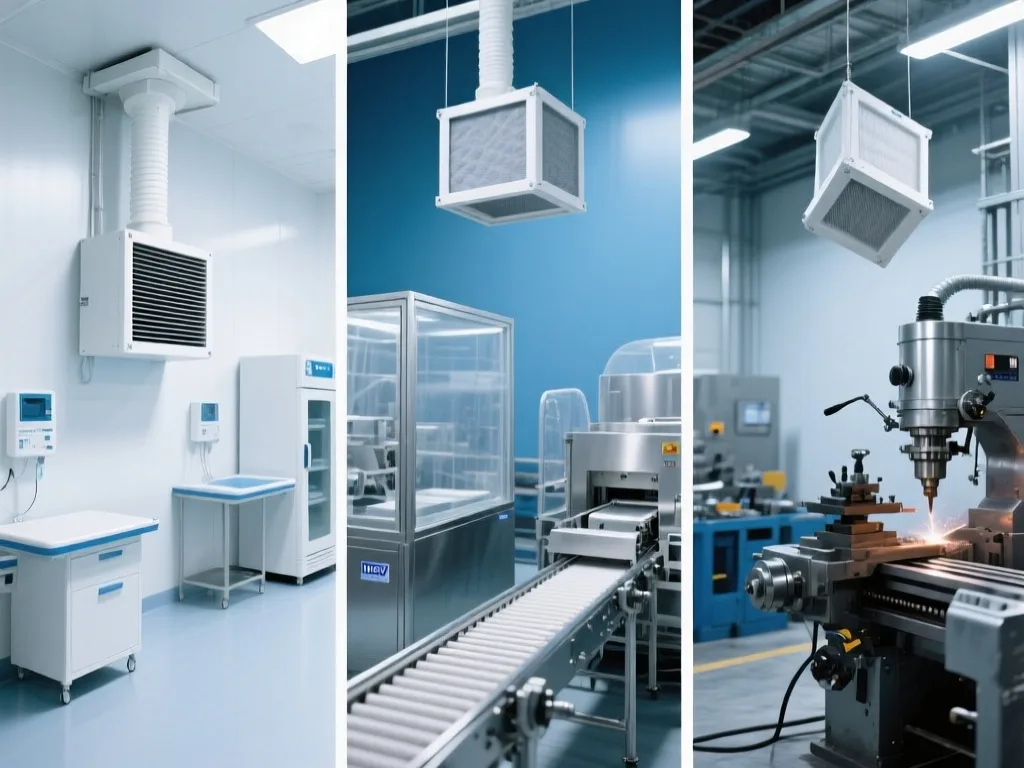
When it comes to industrial air filtration, understanding the practical implications of MERV ratings is crucial for optimizing performance and ensuring optimal air quality. MERV ratings, or Minimum Efficiency Reporting Values, serve as a universal standard for measuring the effectiveness of air filters in capturing particles of varying sizes. But how exactly do these ratings translate into real-world applications across different industries? Let’s dive into the specifics and explore how MERV ratings impact various sectors, from healthcare to manufacturing and beyond. For a deeper understanding of MERV ratings, you can refer to the EPA’s guide on MERV ratings.
Healthcare Industry Applications
In healthcare facilities, maintaining a sterile environment is paramount. High MERV-rated filters, typically MERV 13 and above, are essential for capturing bacteria, viruses, and other microscopic pathogens. These filters help prevent the spread of airborne diseases, ensuring a safe and healthy environment for patients and staff alike. But it’s not just about choosing the highest MERV rating available; it’s about finding the right balance between filtration efficiency and airflow resistance. A filter that’s too restrictive can strain HVAC systems, leading to increased energy consumption and potential equipment failure. That’s why healthcare facilities often opt for MERV 13-16 filters, which offer a sweet spot between high filtration and manageable airflow resistance.
Food and Beverage Industry Considerations
In the food and beverage industry, air quality plays a critical role in product safety and quality control. Contaminants like mold spores, dust, and even insects can wreak havoc on production lines, leading to costly recalls and damaged reputations. Here, MERV 8-11 filters strike a perfect balance, capturing most airborne particles while maintaining sufficient airflow for ventilation systems. These filters are particularly effective in areas where food is processed or packaged, helping to prevent contamination and ensure compliance with strict industry regulations. For more insights on air filtration in the food and beverage industry, check out this IFST Hygiene Report.
Manufacturing Facility Needs
For manufacturing facilities, the choice of MERV rating depends heavily on the specific processes involved. In industries like automotive or electronics manufacturing, where even the tiniest particles can cause defects in finished products, MERV 11-13 filters are often the go-to choice. These filters excel at capturing fine dust, smoke, and other pollutants, ensuring a clean and controlled production environment. On the other hand, facilities dealing with heavier particulates, like woodworking or metal fabrication, might opt for MERV 6-8 filters. These filters offer sufficient capture efficiency for larger particles while minimizing the risk of clogging and reduced airflow.
Beyond Filtration Efficiency
The benefits of MERV ratings extend beyond just filtration efficiency. By selecting the appropriate MERV-rated filter for your specific needs, you can also improve energy efficiency, reduce maintenance costs, and extend the lifespan of your HVAC equipment. How, you ask? Well, it all comes down to finding the right balance between filtration and airflow. A filter that’s too restrictive can cause your HVAC system to work harder, leading to increased energy consumption and potential breakdowns. Conversely, a filter that’s not restrictive enough might allow too many contaminants to pass through, compromising air quality and potentially damaging sensitive equipment. For more information on air filtration compliance and standards, you can visit ASHE’s air filtration compliance page. That’s why it’s essential to consider factors like particle size, airflow requirements, and system compatibility when selecting a MERV-rated filter for your industrial application.
Selecting the Right MERV Rating for Industrial Filtration Needs
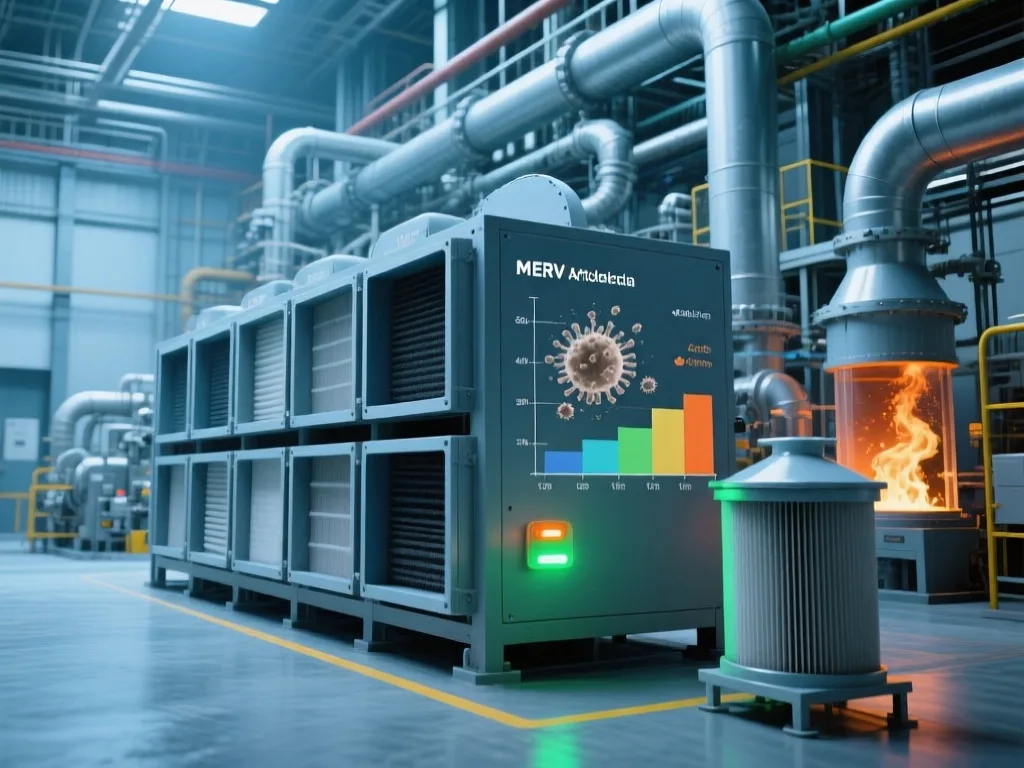
Choosing the appropriate MERV rating for your industrial air filtration system isn’t just about picking the highest number available—it’s about understanding your specific needs and finding the perfect balance between efficiency, airflow, and system compatibility. Let’s break down the key factors you need to consider to make an informed decision that optimizes both performance and cost-effectiveness. First, let’s talk about particle size. Different industries generate different types of particulate matter, ranging from large dust particles to microscopic contaminants. The MERV rating you choose should directly correlate with the size of particles you need to capture. For example, if you’re working in a woodworking shop where sawdust is the primary concern, a filter with a MERV rating between 5 and 8 might suffice, as these are effective at capturing larger particles. However, if you’re in a pharmaceutical manufacturing facility where even the smallest airborne particles could contaminate products, you’ll need a much higher MERV rating—typically 13 or above—to ensure proper filtration. But here’s the catch: higher MERV ratings often mean denser filter media, which can impact airflow. This brings us to our second crucial factor: airflow requirements. Your HVAC system is designed to move a specific volume of air through your facility. If you install a filter with too high a MERV rating, it can restrict airflow, forcing your system to work harder and potentially leading to increased energy consumption, reduced equipment lifespan, or even system failure. On the other hand, choosing a filter with too low a MERV rating won’t effectively capture contaminants, defeating the purpose of your filtration system. So, how do you strike the right balance? Start by consulting your HVAC system’s specifications to understand its recommended airflow rates and pressure drop limits. Then, work with a filtration expert to select a MERV rating that meets your particle capture needs without exceeding your system’s capabilities. System compatibility is another critical consideration. Not all HVAC systems are created equal, and some may not be designed to handle the higher pressure drops associated with high-MERV filters. Older systems, in particular, may struggle with the increased resistance, leading to reduced efficiency or even damage. Before upgrading to a higher MERV rating, have your system evaluated by a professional to ensure it can handle the change. They can assess your ductwork, blower motor, and other components to determine if any modifications are needed to accommodate the new filter. It’s also worth considering the operating environment of your facility. Are there extreme temperatures or humidity levels? Do you deal with corrosive chemicals or other harsh conditions? These factors can impact both the lifespan of your filters and the performance of your HVAC system. In such cases, you may need to look for specialized filters that combine high MERV ratings with additional features like moisture resistance or chemical compatibility. Another aspect to keep in mind is the frequency of filter changes. Higher MERV filters tend to capture more particles, which means they can clog faster than lower-rated filters. This is especially true in environments with high levels of airborne contaminants. While you might be tempted to choose the highest MERV rating possible, remember that more frequent filter changes can increase operational costs over time. Find a MERV rating that provides the level of filtration you need without requiring unrealistic maintenance schedules. Finally, don’t overlook the importance of proper installation and maintenance. Even the best filter won’t perform optimally if it’s not installed correctly or if your system isn’t properly maintained. Make sure your filters are installed according to manufacturer guidelines and that your HVAC system receives regular inspections and tune-ups. This will help ensure that your chosen MERV rating delivers the expected results in terms of air quality and system performance. By carefully considering these factors—particle size, airflow requirements, system compatibility, operating environment, filter change frequency, and proper maintenance—you can select the MERV rating that best meets your industrial filtration needs. Remember, the goal isn’t just to have the highest MERV rating possible, but to find the right balance that provides optimal air quality without compromising your system’s efficiency or longevity. For more information on MERV ratings, visit the EPA’s guide on MERV ratings.
Particle Size Considerations
The size of particles you need to filter plays a significant role in determining the appropriate MERV rating. Larger particles like dust and pollen can be effectively captured by filters with lower MERV ratings (typically between 1 and 4), while smaller particles like bacteria and smoke require higher MERV ratings (13 and above). Understanding the specific contaminants in your industrial environment is crucial for making the right choice. For a deeper understanding of how MERV ratings relate to particle size, refer to this article on MERV ratings and industrial filtration.
Airflow and System Pressure
Higher MERV ratings often mean denser filter media, which can restrict airflow and increase system pressure. This can lead to reduced HVAC efficiency, higher energy costs, and potential damage to your system. Always check your HVAC system’s specifications for recommended airflow rates and pressure drop limits before selecting a filter. A professional evaluation can help determine if your system can handle the pressure drop associated with higher MERV filters. For tips on choosing the right HVAC filter, see this technical tip from Energy Trust.
Operating Environment Factors
Extreme temperatures, humidity levels, or corrosive chemicals in your facility can impact both filter performance and system longevity. In such environments, you may need specialized filters that combine high MERV ratings with additional features like moisture resistance or chemical compatibility. These filters are designed to withstand harsh conditions while maintaining optimal filtration efficiency. For more insights on selecting air filters for different environments, visit Wirecutter’s guide on furnace and air conditioner filters.
Now that you have a comprehensive understanding of what is the MERV rating on air filters, you’re better equipped to make informed decisions about your industrial air filtration needs. Remember, choosing the right MERV rating involves considering factors like particle size, airflow, and system compatibility. By applying the insights shared in this blog, you can optimize your air filtration systems for improved air quality and system performance. Have questions or want to share your experiences? We invite you to join the discussion in the comments section below. Let’s continue exploring the fascinating world of industrial filtration together!