
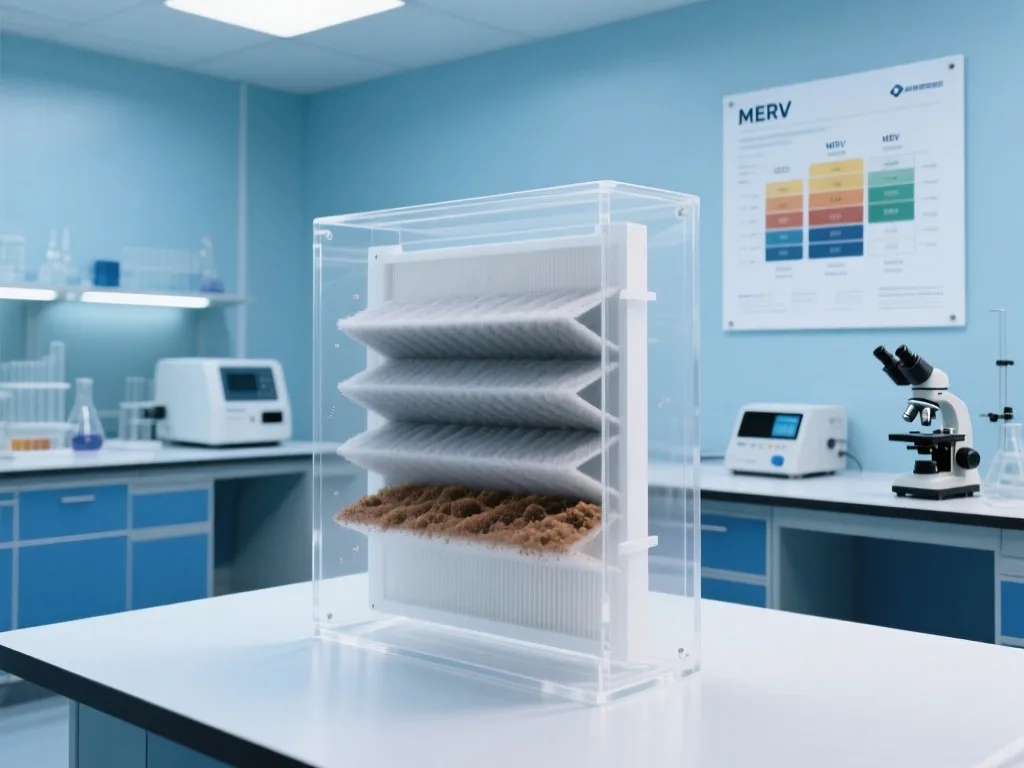
When it comes to improving indoor air quality, understanding what does merv mean on air filters is essential. Whether you’re a homeowner, facility manager, or HVAC professional, selecting the right air filter can make a significant difference in the air you breathe. But with so many MERV ratings out there, how do you know which one is best for your specific environment? In this guide, we’ll uncover the science behind MERV ratings, explain their significance, and provide practical tips for choosing the ideal filter for your home, office, or industrial space.

Decoding MERV Ratings: Your Guide to Understanding the System
When it comes to air filters, you’ve probably encountered the term ‘MERV’ more than once. But what does MERV mean on air filters, and why should you care? Let’s dive into the world of MERV ratings, exploring their history, purpose, and how they measure filter efficiency. The MERV rating system, which stands for Minimum Efficiency Reporting Value, was developed by the American Society of Heating, Refrigerating, and Air-Conditioning Engineers (ASHRAE) in 1987. Its creation was driven by the need for a standardized way to evaluate and compare the performance of air filters in capturing particles of different sizes. Before MERV, manufacturers used various inconsistent methods to rate their filters, making it challenging for consumers and professionals to make informed decisions. The MERV scale ranges from 1 to 20, with higher numbers indicating better filtration capabilities. But how exactly does this system measure filter efficiency? It’s all about testing and particle capture. To determine a filter’s MERV rating, it undergoes rigorous testing in controlled laboratory conditions. The test involves introducing particles of specific sizes into the air stream and measuring how many of those particles the filter captures. These particles are divided into three size ranges: E1 (0.3 to 1.0 micrometers), E2 (1.0 to 3.0 micrometers), and E3 (3.0 to 10.0 micrometers). The test also considers different airflow rates to simulate real-world conditions. The filter’s performance is then calculated based on its ability to capture particles within each size range at various airflow rates. The lowest percentage of particles captured across all test conditions determines the filter’s MERV rating. For example, if a filter captures 70% of E1 particles, 85% of E2 particles, and 90% of E3 particles at a specific airflow rate, but only 20% of E1 particles at another rate, its MERV rating would be based on that 20% figure. This approach ensures that the MERV rating reflects the filter’s minimum performance across all test scenarios, giving you a conservative estimate of its capabilities. It’s important to note that the MERV scale isn’t linear. Each increase in MERV rating doesn’t necessarily mean an equal increase in filtration efficiency. The jumps in performance become more significant as you move up the scale, especially for higher MERV ratings. For more detailed insights into the MERV rating system, you can refer to this informative resource by ASHRAE: Debunking Myths About MERV Air Filtration.
The Science Behind MERV Testing
Understanding the testing process helps demystify MERV ratings. During testing, a known quantity of particles is introduced into the air stream passing through the filter. These particles are carefully measured before and after filtration to determine how many were captured. The test uses a standardized particle counter to ensure accuracy and consistency across different laboratories and manufacturers. The airflow rate is varied during testing to simulate different operating conditions. For example, a filter might be tested at 50, 100, and 150 cubic feet per minute (CFM) per square foot of filter area. This helps determine how the filter performs under varying levels of air resistance, which can change as the filter loads with particles over time. The particle sizes tested are chosen because they represent common contaminants found in indoor air. E1 particles (0.3-1.0 micrometers) include things like bacteria, some viruses, and combustion particles. E2 particles (1.0-3.0 micrometers) encompass mold spores, dust mite debris, and pet dander. E3 particles (3.0-10.0 micrometers) include larger dust particles, pollen, and some insect debris. By testing across these size ranges, the MERV rating provides a comprehensive picture of a filter’s ability to remove various types of contaminants from the air. For a deeper dive into the technical aspects of MERV testing, you can explore the official ASHRAE standard: ASHRAE Standard 52.2-2017 Addendum d.
MERV Ratings and Real-World Performance
While MERV ratings provide a standardized way to compare filters, it’s essential to understand that laboratory performance doesn’t always translate directly to real-world conditions. Factors like airflow patterns in your HVAC system, the presence of other air cleaning devices, and even the layout of your space can affect how well a filter performs in practice. That said, MERV ratings remain an invaluable tool for making informed decisions about air filtration. They allow you to compare filters objectively and choose one that meets your specific needs based on the types and sizes of particles you want to remove from your indoor air. It’s also worth noting that higher MERV ratings don’t always mean better for every situation. While a MERV 16 filter might capture nearly all particles, it can also restrict airflow significantly if your HVAC system isn’t designed to handle such a high-efficiency filter. This can lead to reduced system performance, increased energy consumption, and even potential damage to your HVAC equipment.
The Evolution of MERV Ratings
Since its introduction in 1987, the MERV rating system has undergone several refinements to keep pace with advancements in filtration technology and our understanding of indoor air quality. These updates ensure that the MERV scale remains relevant and useful for consumers and professionals alike. One significant evolution has been the increased focus on capturing smaller particles, particularly those in the E1 range (0.3-1.0 micrometers). As research has revealed more about the health impacts of ultrafine particles, including their ability to penetrate deep into the lungs and even enter the bloodstream, there’s been a greater emphasis on developing filters that can effectively remove these microscopic contaminants. Another area of development has been in creating more durable filters that maintain their MERV rating over time. Early high-MERV filters sometimes experienced significant drops in efficiency as they loaded with particles, but modern designs incorporate advanced materials and construction techniques to maintain consistent performance throughout their service life.

Understanding MERV Ratings and Their Filter Capabilities
Ever wondered what those numbers on your air filter mean? Let’s dive into the world of MERV ratings and discover how they impact the air you breathe every day. The MERV rating system, developed by the American Society of Heating, Refrigerating, and Air-Conditioning Engineers (ASHRAE), is a standardized way to measure how effectively air filters capture particles of different sizes. For a more in-depth understanding, you can refer to the official ASHRAE standard document here. This rating system ranges from 1 to 20, with higher numbers indicating better filtration capabilities. But what exactly do these numbers tell you about your filter’s performance? Let’s break it down by exploring what each MERV rating can capture and how it applies to your specific needs.
MERV 1-4: Basic Filtration for Large Particles
At the lower end of the scale, MERV 1-4 filters provide basic filtration suitable for residential window air conditioners and simple ventilation systems. These filters primarily capture larger particles like dust, lint, and carpet fibers. While they offer minimal resistance to airflow, making them energy-efficient, they’re not effective against smaller particles that can affect air quality. Think of these as your first line of defense against visible dirt and debris in your home or office.
MERV 5-8: Improved Filtration for Common Allergens
Stepping up to MERV 5-8 filters introduces better protection against common household allergens. These filters can capture mold spores, dust mite debris, and pet dander—particles that often trigger allergic reactions. They’re commonly used in residential HVAC systems and some commercial buildings where basic air quality improvement is desired. If you’re looking to reduce sneezing fits during pollen season or minimize pet hair floating around your living room, these filters offer a good balance between filtration efficiency and airflow resistance. For more information on how MERV ratings relate to indoor air quality, visit the EPA’s guide on MERV ratings.
MERV 9-12: Superior Filtration for Fine Particles
For those seeking even cleaner air, MERV 9-12 filters provide superior filtration capabilities. These filters can trap particles as small as 1 micron, including lead dust, auto emission particles, and even some bacteria. They’re ideal for environments where air quality is a top priority, such as hospitals, laboratories, and homes with occupants who have respiratory conditions. For a detailed explanation of MERV ratings and their implications, you can check out Wikipedia’s page on Minimum Efficiency Reporting Value. While they offer excellent protection, it’s important to note that higher MERV ratings in this range may require more frequent filter changes and could slightly reduce airflow in some systems.
MERV 13-16: Hospital-Grade Filtration for Critical Environments
At the top of the residential and commercial scale, MERV 13-16 filters offer hospital-grade filtration. These powerhouses can capture viruses, smoke particles, and even some bacteria with high efficiency. They’re commonly used in operating rooms, cleanrooms, and other critical environments where air purity is non-negotiable. While these filters provide unparalleled protection, they require robust HVAC systems to handle the increased airflow resistance. If you’re considering these for your home, ensure your system can accommodate the higher pressure drop without compromising performance. For further insights into MERV, HEPA, and ASHRAE standards, visit Airmid Healthgroup’s resource.
MERV 17-20: Ultra-High Efficiency for Specialized Applications
The highest MERV ratings, 17-20, are reserved for specialized applications like pharmaceutical manufacturing, nuclear power plants, and other environments requiring absolute air purity. These filters can capture particles as small as 0.3 microns with extremely high efficiency, making them essential in settings where even microscopic contaminants could be catastrophic. For additional information on MERV ratings and their applications, refer to the NAFA brochure on MERV ratings. While these filters offer unmatched performance, they’re typically overkill for residential use and require professional installation and maintenance.

Practical Tips on Choosing the Right MERV Rating Based on Specific Environments and Health Needs
Choosing the right MERV rating for your air filter isn’t just about picking the highest number—it’s about matching your specific needs with the right level of filtration. Whether you’re managing a home, office, or industrial space, understanding how MERV ratings impact air quality and health is crucial. Let’s break down practical tips to help you make an informed decision.
Assess Your Environment
Start by evaluating your surroundings. Homes with pets, smokers, or frequent dust accumulation need filters that capture larger particles like dander, smoke, and dust mites. A MERV 8 filter is a good starting point, but if allergies are a concern, upgrading to MERV 11 or 13 can trap smaller allergens like pollen and mold spores. Offices in busy urban areas face outdoor pollution, requiring MERV 11–13 filters to reduce dust, smoke, and vehicle emissions. For more information on MERV ratings and air quality, visit the EPA’s guide on MERV ratings. Industrial spaces dealing with metal shavings, chemicals, or fine dust need MERV 14–16 filters for optimal protection.
Prioritize Health Needs
Health conditions play a significant role in filter selection. Asthma sufferers benefit from MERV 11–13 filters, which reduce airborne irritants like dust mites and bacteria. For those with weakened immune systems, MERV 13–16 filters offer hospital-grade filtration, capturing viruses and even some bacteria. However, avoid overly high MERV ratings (17–20) in standard HVAC systems, as they can restrict airflow and increase energy costs. Studies have shown that proper filtration can significantly improve respiratory health, as highlighted in this research.
Balance Maintenance and Cost
Higher MERV filters trap more particles but clog faster, requiring frequent replacements. If you’re not prepared for monthly changes, a mid-range MERV 8–11 might be more practical. Cost is another factor—MERV 13 filters are pricier than MERV 8 options. Prioritize critical areas like bedrooms with higher MERV filters and use lower-rated ones in less-used spaces to balance cost and effectiveness.
Understanding what does merv mean on air filters empowers you to make informed decisions about your indoor air quality. By exploring the MERV rating system, its history, and how it measures filter efficiency, you now have the tools to choose the right filter for your specific needs. Whether you’re dealing with allergies, managing an industrial facility, or simply want cleaner air at home, selecting the appropriate MERV rating can make a world of difference. Take a moment to assess your current air filters and consider upgrading based on their MERV ratings—your lungs will thank you. What other air quality improvements could you explore next?