
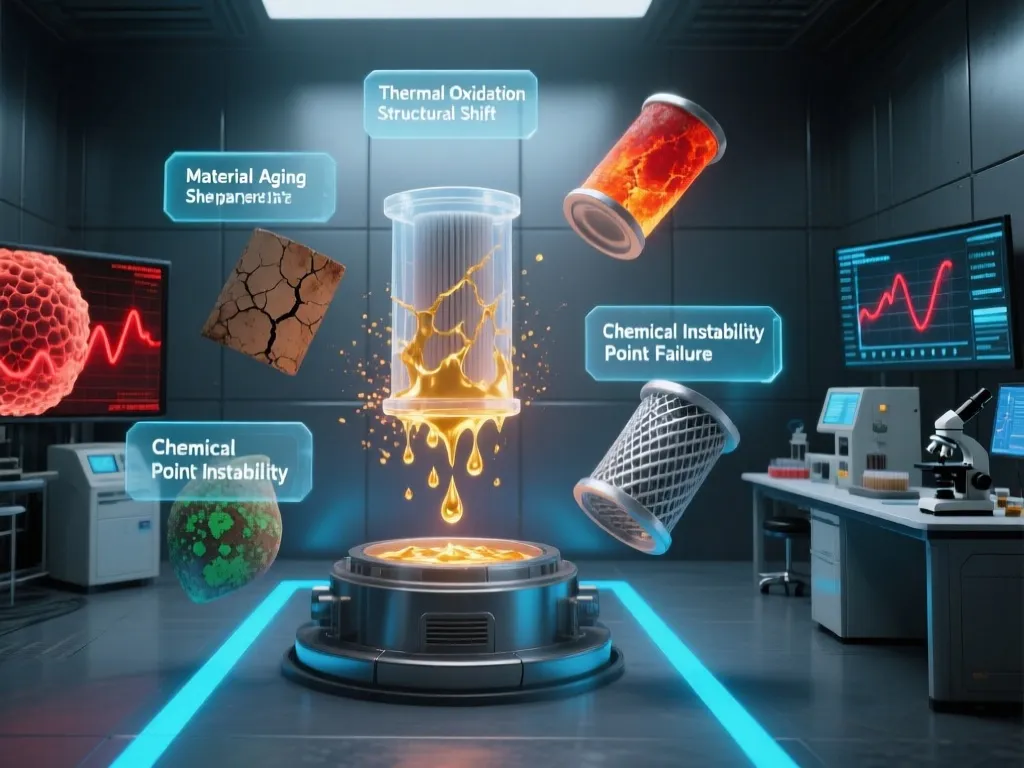
In industrial settings, filters are the unsung heroes keeping systems clean and efficient. But what happens when they start failing under high temperatures? What causes filter degradation at high temperatures? This isn’t just a theoretical question—it’s a practical concern for designers and engineers who need reliable, long-lasting solutions. In this blog, we’ll dive into the science behind filter failure at elevated temps, revealing five key mechanisms that compromise performance. Ready to uncover the secrets to high-temp filter resilience?
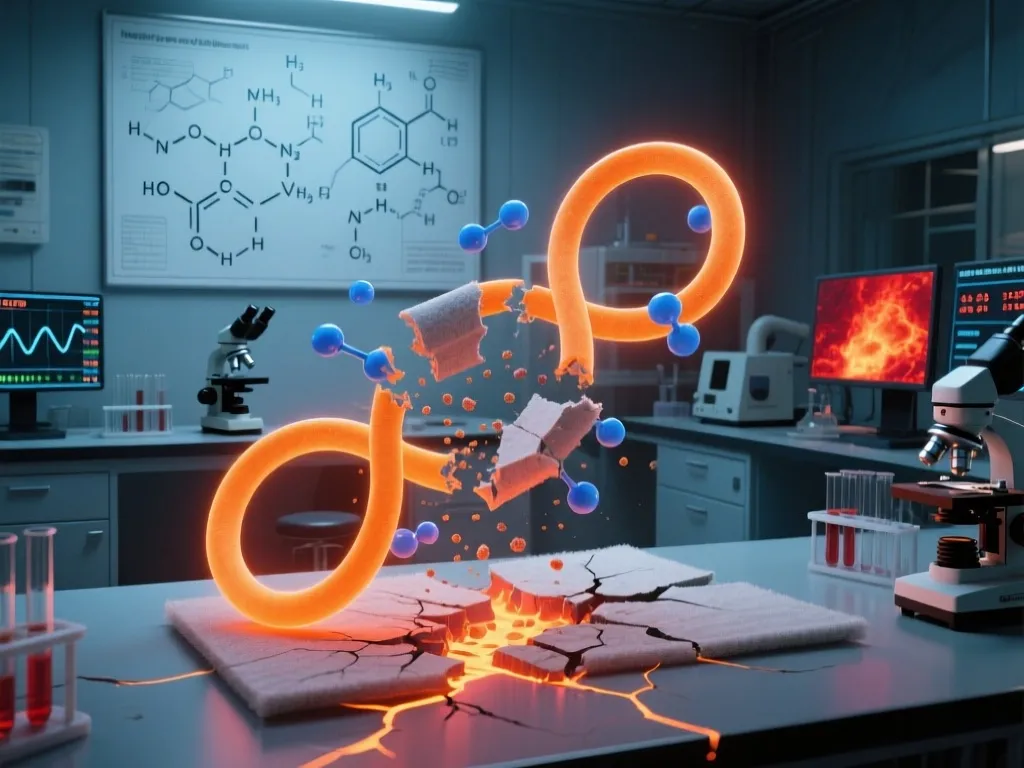
Material Aging and Thermal Oxidation: High Temperatures Accelerate Molecular Chain Breakage in Filter Media, Triggering Oxidation Reactions and Leading to Brittleness and Strength Reduction
When we talk about industrial filtration systems operating under high-temperature conditions, one of the most critical yet often overlooked aspects is the impact of heat on the filter media itself. You see, filter materials aren’t invincible; they’re subject to the laws of chemistry and physics, just like everything else. And at elevated temperatures, these materials start to undergo a series of complex changes that can significantly compromise their performance and lifespan. So, what exactly happens when filter media are exposed to high temperatures for extended periods? Let’s dive into the fascinating world of material aging and thermal oxidation. First off, it’s essential to understand that filter media are typically made up of polymers or other organic compounds. These materials have long molecular chains that give them their strength and flexibility. However, when exposed to high temperatures, these molecular chains start to vibrate more vigorously. This increased vibration can lead to the breaking of some of the weaker bonds within the chains, a process known as molecular chain breakage. Now, you might be thinking, ‘Okay, so some bonds break. What’s the big deal?’ Well, the problem is that once these bonds are broken, the filter media can no longer maintain their original structure and integrity. The material becomes more prone to deformation and, ultimately, failure. But the story doesn’t end there. High temperatures also accelerate a process called thermal oxidation. This is where oxygen molecules in the air react with the filter media, causing a series of chemical reactions that can further degrade the material. Think of it like rust forming on metal, but instead of iron oxide, you’re getting various oxidation products that can weaken the filter media. As thermal oxidation progresses, the filter media start to lose their flexibility and become more brittle. This brittleness is a significant concern because it means the filter media are more likely to crack or break under stress. And once a filter media cracks, its ability to effectively capture and retain particles is severely compromised. You might be wondering, ‘How quickly does this degradation happen?’ The answer depends on several factors, including the type of filter media, the temperature it’s exposed to, and the duration of exposure. Some materials might start to show signs of degradation after just a few hours at high temperatures, while others might last for days or even weeks before significant damage occurs. But regardless of the specific timeline, the bottom line is that high temperatures are a major threat to the longevity and performance of filter media. So, what can you do to mitigate this risk? One approach is to choose filter media that are specifically designed to withstand high temperatures. These materials often have higher thermal stability and are less prone to molecular chain breakage and thermal oxidation. Another strategy is to implement cooling systems or other temperature control measures to keep the filter media within a safe operating range. By understanding the science behind material aging and thermal oxidation, you can take proactive steps to protect your filtration system and ensure it continues to perform at its best, even under the most challenging conditions.
The Role of Molecular Structure in Filter Media Degradation
The molecular structure of filter media plays a pivotal role in determining their resistance to high-temperature degradation. Polymers with longer, more complex molecular chains generally offer better strength and durability. However, these same chains are also more susceptible to breakage under extreme heat. This is because the increased kinetic energy at high temperatures causes the molecules to vibrate more intensely, leading to a higher likelihood of bond rupture. Additionally, the presence of certain functional groups or additives within the polymer can influence its thermal stability. For example, antioxidants can help slow down the oxidation process by scavenging free radicals that would otherwise react with the filter media. Understanding the molecular composition of your filter media is crucial for predicting their behavior under high-temperature conditions and selecting the most appropriate materials for your application.
Factors Influencing the Rate of Thermal Oxidation
Thermal oxidation doesn’t occur at a uniform rate across all filter media and operating conditions. Several factors can influence the speed and extent of this degradation process. One of the most significant is the temperature itself. As a general rule, the higher the temperature, the faster the oxidation reactions will proceed. This is because heat provides the energy needed to overcome the activation energy barrier for these reactions to occur. Another factor is the presence of oxygen. Since thermal oxidation is an oxygen-dependent process, environments with higher oxygen concentrations will see more rapid degradation. This is why vacuum or inert gas environments can be beneficial for protecting filter media from thermal oxidation. The chemical composition of the filter media also plays a role. Some materials are inherently more resistant to oxidation than others, thanks to their molecular structure or the presence of stabilizing additives. Finally, the duration of exposure to high temperatures is critical. Even materials with excellent thermal stability will eventually degrade if exposed to extreme heat for long enough.
Practical Strategies for Mitigating High-Temperature Filter Media Degradation
Now that we’ve explored the science behind high-temperature filter media degradation, let’s turn our attention to some practical strategies for mitigating this risk. One of the most effective approaches is to select filter media that are specifically engineered for high-temperature applications. These materials often incorporate advanced polymers or composite structures that offer superior thermal stability and resistance to oxidation. Another strategy is to implement temperature control measures within your filtration system. This could involve using cooling jackets, heat exchangers, or other methods to keep the filter media within a safe operating range. Additionally, regular maintenance and inspection can help identify signs of degradation early on, allowing you to replace filter media before they fail completely. Finally, consider working with a filtration expert who can provide tailored advice and solutions based on your specific application and operating conditions. By taking a proactive approach to managing high-temperature filter media degradation, you can extend the lifespan of your filtration system and ensure consistent, reliable performance.
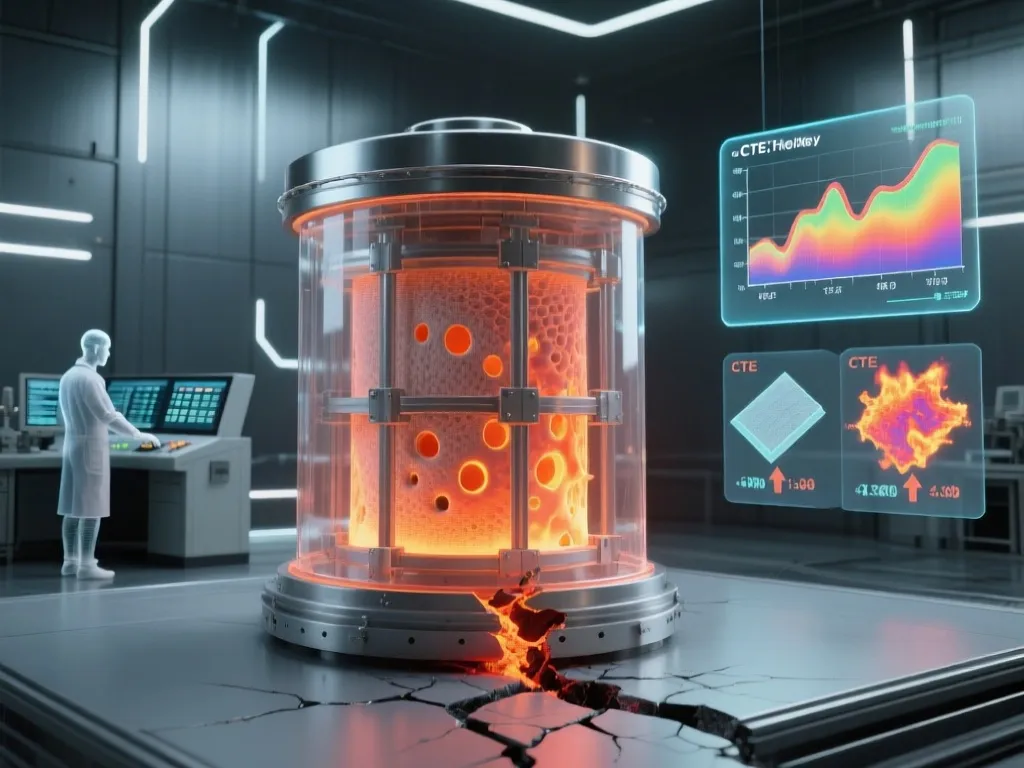
Thermal Expansion and Physical Structure Changes: How Differential Thermal Expansion Coefficients of Filter Materials Lead to Porosity Variations, Seal Failures, and Even Cracks
When it comes to industrial filtration at high temperatures, one of the most critical yet often overlooked factors is the thermal expansion behavior of filter materials. You see, every material has its own unique thermal expansion coefficient (CTE) – a measure of how much it expands or contracts when exposed to temperature changes. Now, here’s where things get interesting (and potentially problematic) in high-temperature filtration systems. In a typical filter assembly, you’ll have multiple components made from different materials – the filter media itself, the support structure, the housing, and various seals. Each of these components will have its own CTE. When the system heats up, these components won’t expand uniformly. This differential expansion is where the trouble begins.
Let’s break down the consequences of this thermal mismatch: First up, porosity changes. The filter media’s pore structure is carefully designed for optimal filtration performance. But when it expands differently than its surrounding support structure, those pores can distort. Some may close up, reducing flow rates and increasing pressure drops. Others might open too wide, allowing contaminants to pass through that should be captured. It’s a recipe for inconsistent filtration quality that can compromise your entire process.
Next, consider the seals. In high-temperature applications, seals are already under significant stress from the heat itself. But when you add differential expansion into the mix, it’s like putting the final straw on the camel’s back. The seal materials might expand at a different rate than the surfaces they’re meant to seal against, creating gaps where leaks can develop. This isn’t just about losing a bit of fluid – in many industrial processes, these leaks can be dangerous, costly, or both.
And then there’s the big one: cracking. When materials expand at different rates, they’re essentially being pulled and pushed against each other. Over time, this stress can lead to micro-cracks forming in the filter media or support structures. These cracks might be invisible at first, but they’ll grow with each thermal cycle. Eventually, you could be looking at catastrophic failure of the filter element.
So, how do engineers and designers tackle these thermal expansion challenges? One approach is material selection. By choosing materials with similar CTEs for critical components, you can minimize differential expansion. For example, some high-performance filters use specialized metal alloys or ceramic composites where the CTE of the media matches that of the support structure. Another strategy is designing for flexibility. Some modern filter designs incorporate flexible elements or expansion joints that can accommodate differential expansion without compromising the seal or structural integrity. These might take the form of bellows-type seals or specially engineered gaskets that can deform slightly as temperatures change.
Temperature management is also crucial. By controlling the rate of temperature change in the system, you can reduce the thermal shock that contributes to cracking and seal failure. This might involve implementing gradual warm-up and cool-down cycles or using pre-heating systems for cold start-ups. Let’s look at a real-world example. In the aerospace industry, where filters are exposed to extreme temperature variations, engineers have developed advanced filtration systems that use shape memory alloys. These materials can change their shape in response to temperature changes, effectively compensating for differential expansion in other components. While this technology is still relatively niche, it shows the kind of innovative thinking that’s needed to tackle thermal expansion challenges in high-temperature filtration.
So, what does all this mean for you, the designer or operator of high-temperature filtration systems? It means that understanding and managing thermal expansion isn’t just a nice-to-have – it’s absolutely essential for reliable, long-lasting filter performance. By considering CTEs during material selection, incorporating flexible design elements, and implementing proper temperature management protocols, you can significantly reduce the risk of porosity changes, seal failures, and cracking in your filtration systems.
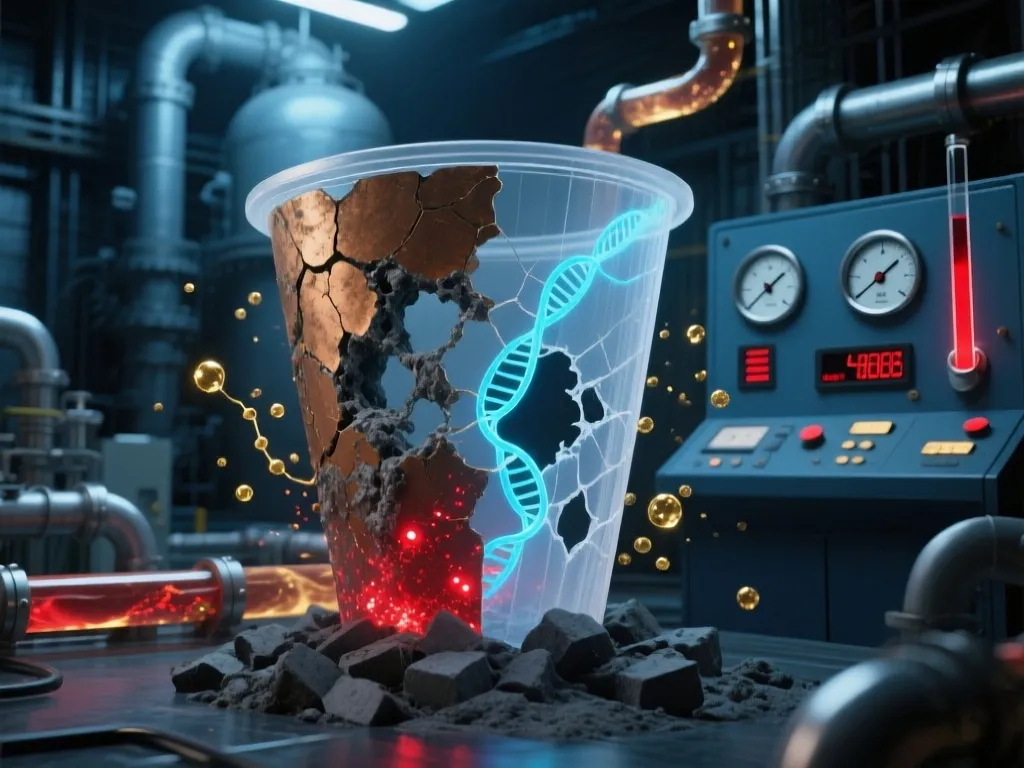
Chemical Stability Challenges: Chemical Reactions Between Filter Materials and Media at High Temperatures Alter Surface Properties and Affect Filtration Efficiency
When it comes to industrial filtration, the chemical stability of filter materials at high temperatures is a critical factor that can’t be overlooked. You might be wondering, what exactly happens when filter materials are exposed to elevated temperatures? Well, let’s dive into the fascinating world of chemical reactions and their impact on filtration. At high temperatures, filter materials and the media they interact with can undergo a series of chemical changes. These reactions are often complex and can significantly alter the surface properties of the filter. For instance, some filter materials may react with the gases or liquids present in the filtration process, leading to the formation of new compounds on the surface. This new layer can either clog the pores, reducing the filtration efficiency, or change the surface charge, affecting the adsorption of particles.
One common scenario is the oxidation of filter materials. Many metals and polymers used in filters are prone to oxidation at high temperatures. When oxygen in the air reacts with the filter material, it forms metal oxides or polymer degradation products. These oxidation products can have different physical and chemical properties compared to the original material. For example, metal oxides may have a higher melting point and lower porosity, which can reduce the flow rate through the filter. On the other hand, polymer degradation products may be more soluble in the filtration media, leading to the leaching of filter components and contamination of the filtered product.
Another chemical reaction that can occur is the hydrolysis of filter materials. In some filtration processes, water is present either as a component of the media or as a by – product. At high temperatures, water can react with certain filter materials, such as some polymers and inorganic compounds, breaking their chemical bonds. This hydrolysis reaction can weaken the filter structure, causing it to break down or lose its shape. As a result, the pore size and distribution of the filter change, leading to a decrease in filtration efficiency and an increase in pressure drop across the filter.
Moreover, the interaction between the filter material and the chemicals in the media can also lead to the formation of precipitates. These precipitates can deposit on the filter surface, blocking the pores and reducing the available filtration area. In some cases, the precipitates may even react further with other components in the media, creating a complex layer of deposits that is difficult to remove. This not only affects the current filtration process but can also have long – term effects on the filter’s lifespan and performance.
From an industrial perspective, these chemical reactions pose significant challenges. For example, in the chemical processing industry, where high – temperature filtration is common, the formation of unwanted chemical compounds on the filter surface can lead to product contamination. This can result in quality issues, product recalls, and financial losses. In the power generation industry, the efficiency of gas turbines and other equipment can be affected by the performance of high – temperature filters. If the filters are not chemically stable, they may need to be replaced more frequently, increasing maintenance costs and downtime.
So, how can we address these chemical stability challenges? One approach is to select filter materials that are inherently more chemically stable at high temperatures. For example, some advanced ceramics and high – performance polymers have excellent chemical resistance and can withstand harsh environments. Another strategy is to use surface coatings or treatments to enhance the chemical stability of the filter material. These coatings can act as a barrier, preventing the filter material from reacting with the media. Additionally, optimizing the filtration process parameters, such as temperature, pressure, and flow rate, can also help minimize the occurrence of chemical reactions. By understanding the chemical reactions that can occur at high temperatures and taking proactive measures, we can ensure that our filters maintain their performance and efficiency, even in the most demanding industrial applications.
Understanding What causes filter degradation at high temperatures is more than academic—it’s the key to designing systems that withstand extreme conditions. From material aging and thermal oxidation to structural shifts and chemical instability, these five mechanisms reveal why filters fail and how to prevent it. By applying these insights, you can optimize your filtration setups for durability and efficiency. Want to take your high-temp filtering to the next level? Reach out to our experts for tailored solutions that keep your operations running smoothly, no matter the heat.