

In the industrial filtration world, getting custom filter bags right is crucial. But what information is needed for custom filter bags to ensure they fit like a glove and perform at their best? Whether you’re an industrial merchant seeking tailored solutions or a device maintenance pro, understanding the key parameters is a game-changer. Let’s dive into the nitty-gritty of custom filter bag customization, from sizing to material selection and beyond.

Sizing Customization: A Detailed Guide on Determining Filter Bag Dimensions Based on Equipment Specifications
When it comes to customizing filter bags, getting the dimensions right is crucial. After all, a filter bag that doesn’t fit properly can lead to inefficiencies, leaks, and even damage to your filtration equipment. So, how do you ensure that your custom filter bags are the perfect match for your specific needs? Let’s dive into the nitty-gritty of determining the length, diameter, and other key parameters of filter bags based on your equipment’s specifications. First things first, you need to understand the basic structure of your filtration system. Is it a baghouse, a cartridge filter, or something else entirely? Each type of system has its own unique requirements when it comes to filter bag dimensions. For instance, baghouses typically require longer filter bags with larger diameters to accommodate the larger volume of air or gas being filtered. On the other hand, cartridge filters might need shorter, narrower bags to fit within the compact cartridge housing. Once you’ve identified the type of system you’re working with, it’s time to measure up. Start by measuring the length of the filter bag housing or the space where the bag will be installed. This will give you a good starting point for determining the length of your custom filter bag. Keep in mind that you’ll want to leave a little bit of extra length for the bag to hang freely and ensure proper sealing at the top. Next, measure the diameter of the housing or the opening where the bag will be inserted. This is crucial for ensuring that the bag fits snugly without any gaps that could allow contaminants to bypass the filter. If you’re unsure about the exact diameter, it’s always better to err on the side of caution and choose a slightly smaller bag that can be stretched to fit rather than a larger one that might not seal properly. But wait, there’s more to it than just length and diameter. You also need to consider the shape of the filter bag. Some systems require cylindrical bags, while others might need conical or even custom-shaped bags to fit within specific spaces. Don’t be afraid to get creative here – as long as the bag fits properly and functions as intended, the shape is up to you. Now, let’s talk about some of the common pitfalls to avoid when customizing filter bag dimensions. One of the biggest mistakes is assuming that one size fits all. Every filtration system is unique, and what works for one might not work for another. That’s why it’s so important to take accurate measurements and consult with a professional if you’re unsure about anything. Another mistake is neglecting to consider the operating conditions of your system. Will the filter bag be exposed to high temperatures, corrosive chemicals, or abrasive particles? These factors can all affect the lifespan and performance of your filter bag, so it’s important to choose materials and dimensions that can withstand the specific challenges of your application. So, how do you ensure that your custom filter bags are the perfect fit? The key is to work closely with a reputable manufacturer or supplier who has experience in customizing filter bags for a wide range of applications. They can help you navigate the complexities of dimensioning, material selection, and other factors to ensure that your filter bags meet your exact needs. In conclusion, customizing filter bag dimensions is all about understanding your equipment’s specifications, taking accurate measurements, and considering the unique challenges of your application. By following these guidelines and working with a knowledgeable partner, you can ensure that your custom filter bags are the perfect match for your filtration system.
Measuring for Length and Diameter
When measuring for length, always account for the extra length needed for hanging and sealing. For diameter, ensure a snug fit without gaps. If unsure, opt for a slightly smaller bag that can be stretched rather than a larger one that might not seal correctly. Remember, accuracy is key here – even a small miscalculation can lead to big problems down the line.
Considering the Shape of the Filter Bag
The shape of your filter bag is just as important as its length and diameter. Cylindrical bags are common, but conical or custom-shaped bags might be necessary for certain applications. Think about the space where the bag will be installed and choose a shape that fits perfectly. Don’t be afraid to get creative – as long as it works, it’s a good choice.
Avoiding Common Pitfalls
One of the biggest mistakes is assuming a one-size-fits-all approach. Every filtration system is unique, so take the time to understand your specific needs. Also, don’t neglect to consider operating conditions like temperature, chemicals, and abrasive particles. These factors can all impact the performance and lifespan of your filter bag, so choose wisely.
Materials for Custom Filter Bags: Choosing Based on Fluid Type
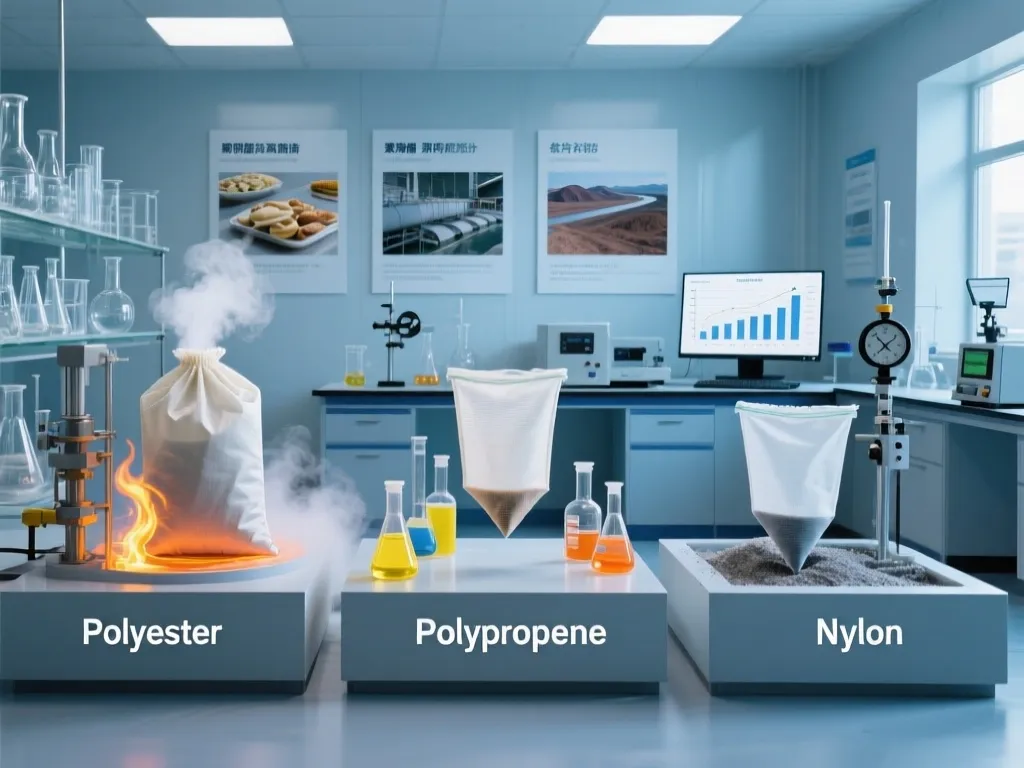
When it comes to custom filter bags, the material you choose is just as crucial as the size and filtration accuracy. Different materials offer unique properties that make them suitable for specific applications and fluid types. Let’s dive into the most common materials used for custom filter bags—polyester, polypropylene, and nylon—and explore their characteristics and ideal use cases. Polyester is one of the most popular materials for custom filter bags, and for good reason. It’s known for its excellent strength and durability, making it ideal for applications where the filter bag will be subjected to high pressure or mechanical stress. Polyester also has good chemical resistance, although it’s not as resistant to strong acids and alkalis as some other materials. One of the key advantages of polyester is its ability to withstand high temperatures, typically up to around 130°C (266°F). This makes it suitable for filtering hot fluids in industries like food processing, pharmaceuticals, and chemical manufacturing. For specific polyester filter bag options, you can explore our range of high-efficiency polyester filter bags designed for industrial use. Polyester filter bags are also relatively easy to clean and reuse, which can help reduce costs over time. Polypropylene is another widely used material for custom filter bags, especially in applications where chemical resistance is a top priority. Unlike polyester, polypropylene is highly resistant to a wide range of chemicals, including acids, alkalis, and solvents. This makes it an excellent choice for filtering aggressive fluids in industries like wastewater treatment, petrochemicals, and electroplating. In addition to its chemical resistance, polypropylene is also known for its low moisture absorption and good dimensional stability. This means that polypropylene filter bags are less likely to shrink or swell when exposed to moisture, ensuring consistent performance over time. However, polypropylene has a lower melting point than polyester, typically around 160°C (320°F), so it’s not suitable for high-temperature applications. Nylon is a versatile material that offers a unique combination of properties, making it suitable for a variety of applications. One of the key advantages of nylon is its excellent abrasion resistance, which makes it ideal for filtering fluids that contain abrasive particles. Nylon also has good chemical resistance, although it’s not as resistant to strong acids and alkalis as polypropylene. Nylon filter bags are often used in industries like mining, cement, and power generation, where the filter bag will be exposed to abrasive materials and harsh operating conditions. Nylon is also known for its high tensile strength and good elasticity, which allows it to withstand high pressure and mechanical stress without breaking or deforming. However, nylon has a relatively high moisture absorption rate, which can affect its performance in humid environments. So, how do you choose the best material for your custom filter bag? The answer depends on the type of fluid you’re filtering and the operating conditions of your application. If you’re filtering hot fluids or need a filter bag that can withstand high pressure, polyester might be the best choice. If chemical resistance is your top priority, polypropylene is likely the way to go. And if you’re dealing with abrasive materials or need a filter bag with high tensile strength, nylon could be the ideal solution. By understanding the properties and use cases of each material, you can make an informed decision and choose the best custom filter bag for your specific needs.
Polyester: Strength and Heat Resistance
Polyester stands out for its robustness and ability to handle high temperatures. Its strength makes it perfect for applications with high pressure or mechanical stress. The good chemical resistance, though not against strong acids and alkalis, adds to its versatility. The high – temperature tolerance, up to around 130°C (266°F), makes it a go – to for hot fluid filtering in food, pharmaceutical, and chemical industries. Also, its ease of cleaning and reusability can cut costs in the long run. For heavy-duty applications, consider our heavy-duty reinforced polyester filter bags.
Polypropylene: Chemical Resistance Champion
Polypropylene is the king of chemical resistance among these materials. It can stand up to a wide array of chemicals, including acids, alkalis, and solvents. This makes it a top pick for filtering aggressive fluids in wastewater treatment, petrochemicals, and electroplating. Its low moisture absorption and good dimensional stability ensure consistent performance, even when exposed to moisture. But its lower melting point of around 160°C (320°F) limits its use in high – temperature scenarios.
Nylon: Abrasion and Pressure Fighter
Nylon offers a great blend of properties. Its excellent abrasion resistance makes it great for filtering fluids with abrasive particles, like in mining, cement, and power generation. It has good chemical resistance, though not as strong as polypropylene against strong acids and alkalis. Its high tensile strength and good elasticity allow it to handle high pressure and mechanical stress. However, its relatively high moisture absorption rate can be a drawback in humid environments. For dust collection solutions that require durability, check out our industrial reusable dust filter bags.
Filtration Accuracy: Understanding the Concept, Its Impact on Filtration Results, and How to Choose the Right Grade
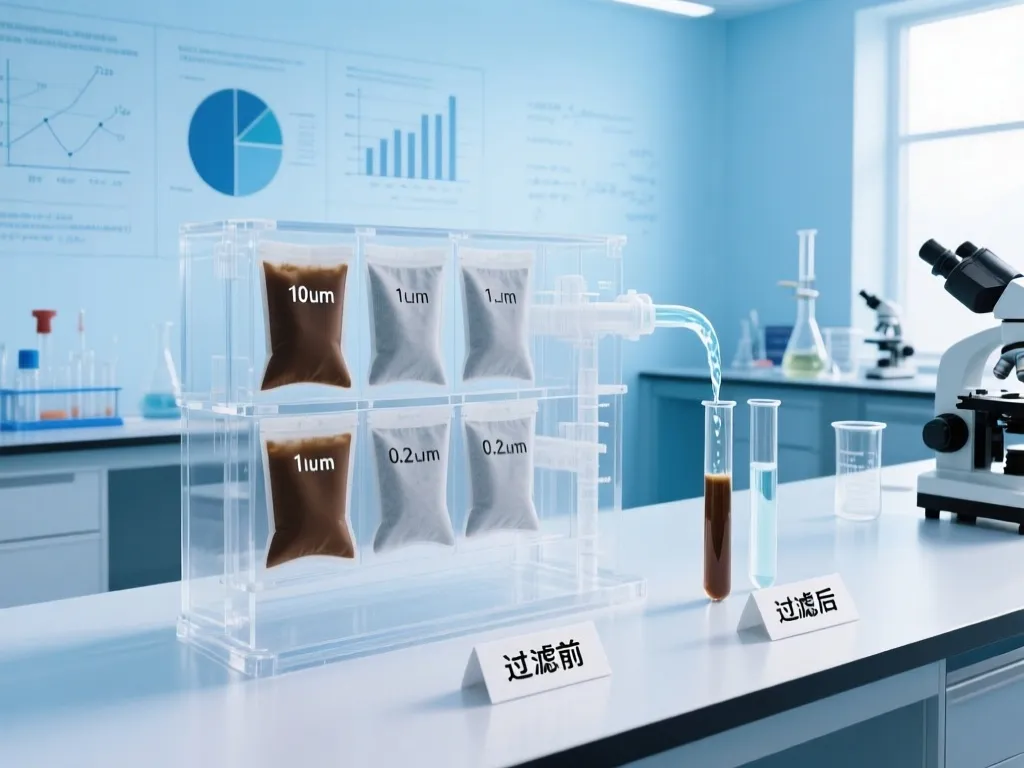
When it comes to custom filter bags, one of the most critical yet often overlooked aspects is filtration accuracy. You might be wondering, ‘What exactly is filtration accuracy, and why does it matter so much?’ Well, let’s break it down in a way that’s easy to understand. Filtration accuracy refers to the size of the particles that a filter bag can effectively capture. It’s measured in microns (μm), where a micron is one-millionth of a meter. Think of it like a sieve; the smaller the holes in the sieve, the finer the particles it can trap. For instance, a filter bag with a 10-micron accuracy will allow particles smaller than 10 microns to pass through while capturing larger ones.
Now, why does this matter for your filtration process? The answer lies in the quality of your end product and the efficiency of your system. If you’re filtering a liquid or gas to remove impurities, the filtration accuracy determines how clean the final output will be. A higher accuracy (lower micron rating) means fewer impurities, but it also requires more energy to push the fluid through the filter, potentially increasing operational costs. Conversely, a lower accuracy might be sufficient for some applications but could leave unwanted particles in your product, affecting its quality and potentially causing damage to downstream equipment.
So, how do you choose the right filtration accuracy for your custom filter bag? It all starts with understanding your specific needs. Ask yourself, ‘What are the smallest particles I need to remove from my fluid?’ and ‘What level of purity is required for my application?’ For example, if you’re in the food and beverage industry, you might need a very high filtration accuracy to ensure that no bacteria or microscopic contaminants make it into your products. On the other hand, if you’re filtering coolant in a machining process, a slightly lower accuracy might be acceptable as long as it captures the larger metal shavings and debris. Another factor to consider is the flow rate of your system. Higher filtration accuracy typically means a slower flow rate because the fluid has to pass through smaller pores. If your system requires a high flow rate, you might need to balance accuracy with permeability to ensure optimal performance. This is where consulting with a filtration expert becomes invaluable. They can help you analyze your system’s requirements and recommend a filter bag with the right accuracy grade that meets both your purity and flow rate needs.
Let’s look at a real-world example to illustrate this point. Suppose you’re running a pharmaceutical manufacturing plant that produces intravenous (IV) fluids. The stakes are incredibly high here because any impurities in the IV fluids could have severe consequences for patients. In this case, you’d need a custom filter bag with an extremely high filtration accuracy, perhaps in the range of 0.2 to 1 micron, to ensure that even the tiniest bacteria or particles are removed. On the flip side, if you’re operating a wastewater treatment plant, your filtration needs might be different. While you still want to remove as many impurities as possible, the exact level of purity might not be as critical as in the pharmaceutical example. Here, you might opt for a filter bag with a slightly lower accuracy, say 5 to 10 microns, to strike a balance between filtration efficiency and operational costs.
In conclusion, filtration accuracy is a vital parameter when customizing your filter bags. It directly impacts the quality of your filtered product, the efficiency of your system, and your overall operational costs. By understanding your specific needs, considering factors like flow rate and purity requirements, and consulting with experts, you can choose the right filtration accuracy grade that ensures optimal performance and peace of mind. So, the next time you’re in the market for custom filter bags, don’t overlook this crucial aspect. Take the time to assess your needs and make an informed decision that will benefit your business in the long run.
So, there you have it—the essential info on what information is needed for custom filter bags. With size, material, and filtration accuracy in your toolkit, customizing filter bags becomes a breeze. But don’t stop here! The world of industrial filtration is vast, and there’s always more to learn. Want to ensure your next custom filter bag order is spot-on? Reach out to our experts for personalized advice and take the first step towards a more efficient filtration system. What other filtration challenges are you facing?