
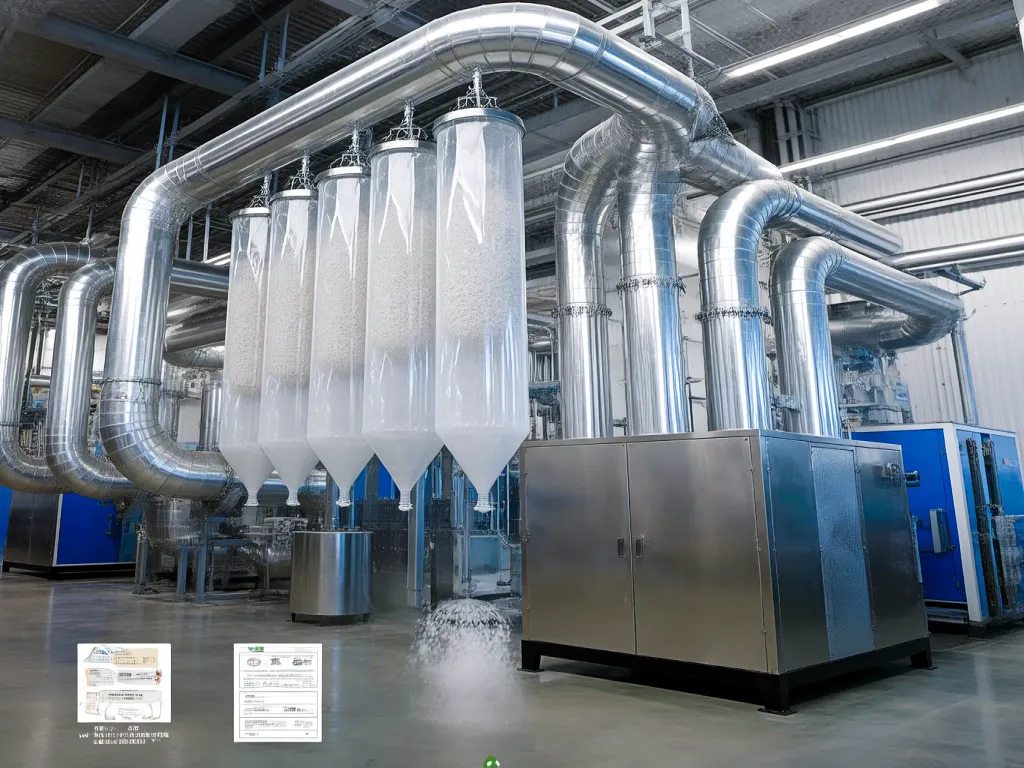
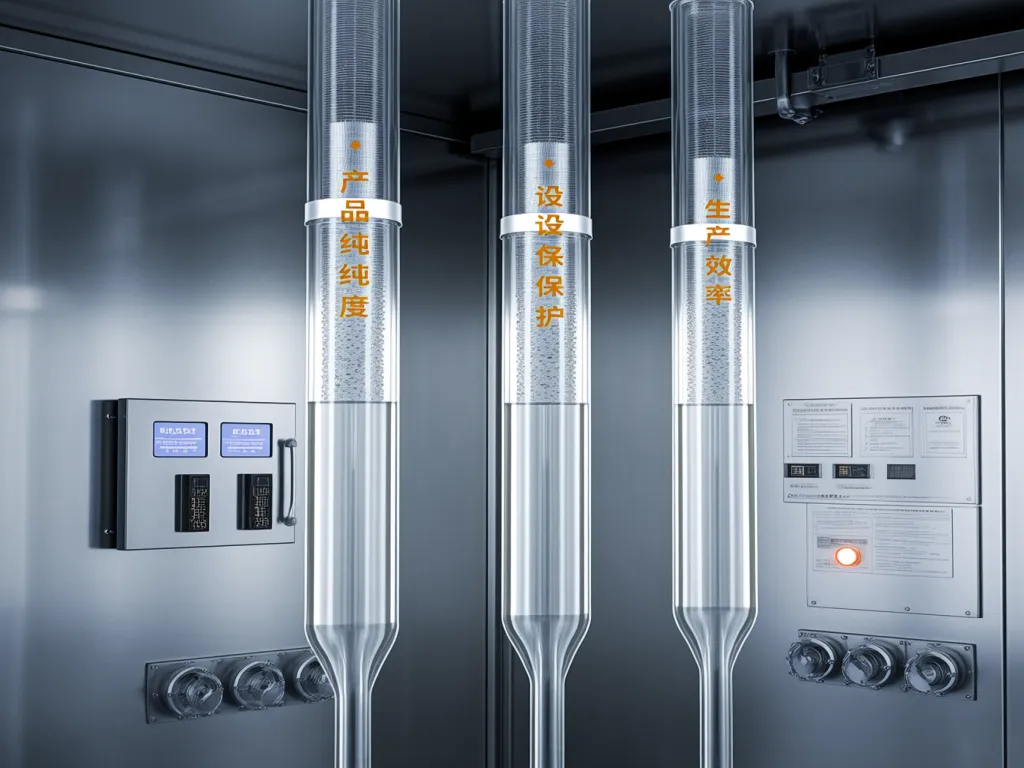

In the industrial world, where precision is key, finding the right filter sacks can make or break your production line. Ever wondered how to sift through the noise and pinpoint high quality filter sacks for sale that truly meet your needs? It’s not just about grabbing any filter sack off the shelf; it’s about understanding the nuances of filtration accuracy. In this guide, we’ll dive deep into why filtration precision matters and how you can pick the perfect filter sacks for your operations. Ready to elevate your filtering game?

Why Filtration Accuracy Matters: Impact on Product Purity, Equipment Protection, and Production Efficiency
Product Purity: The First Line of Defense
Imagine you’re producing a high-value chemical compound. Every microscopic contaminant that slips through your filter sack can degrade the final product’s purity, leading to quality control failures, customer complaints, or even regulatory non-compliance. Filtration accuracy determines how effectively your filter sack blocks unwanted particles—from coarse debris to sub-micron pollutants. For instance, a 5-micron filter sack might suffice for general-purpose filtration, but if your process demands ultra-pure outputs (e.g., semiconductor manufacturing), a 0.5-micron or even 0.1-micron filter becomes non-negotiable. The stakes are high: even a 1% impurity rate could render an entire batch unusable, costing thousands in wasted materials and production downtime. By investing in high-precision filter sacks, you’re not just buying a product—you’re safeguarding your brand’s reputation for quality.
Equipment Protection: Extending Lifespan, Reducing Costs
Your industrial machinery isn’t cheap, and neither are the repairs when abrasive particles wreak havoc on pumps, valves, or nozzles. Filtration accuracy acts as a shield, preventing contaminants from circulating through your system. Think of it like this: a clogged filter sack forces your equipment to work harder, increasing wear and tear. But a poorly chosen filter (e.g., one with too coarse a rating) lets harmful particles through, causing erosion, corrosion, or blockages. For example, in a cement plant, unfiltered dust can abrade conveyor belts and clog air compressors, leading to frequent breakdowns. By contrast, a precisely rated filter sack (say, 10 microns for coarse dust and 1 micron for fine particulates) can extend equipment life by years, slashing maintenance costs and unplanned downtime. The math is simple: a $200 high-precision filter sack that protects $50,000 worth of machinery is a bargain.
Production Efficiency: Speed Without Sacrifice
In industrial settings, time is money. A filter sack that strikes the right balance between accuracy and flow rate ensures your processes run smoothly without bottlenecks. Here’s the catch: overly tight filtration (e.g., a 0.2-micron filter for a job that only needs 5 microns) can slow down production by restricting flow, while too-loose filtration lets contaminants through, causing quality issues. The sweet spot? Choosing a filter sack with filtration accuracy tailored to your specific needs. For instance, a food processing plant might use a 20-micron filter to remove large debris quickly, then a 5-micron secondary filter for final polishing. This multi-stage approach maximizes throughput while maintaining purity. The result? Fewer interruptions, higher yields, and faster turnaround times—all of which boost your bottom line.
The Cost of Inaction: Why ‘Good Enough’ Isn’t Enough
You might be tempted to cut corners by opting for cheaper, lower-precision filters. But consider the hidden costs: rework due to contaminated products, emergency equipment repairs, or lost contracts from inconsistent quality. That’s not just money down the drain—it’s a competitive disadvantage. By contrast, investing in high-quality filter sacks for sale with the right filtration accuracy pays dividends in reliability, efficiency, and customer trust.
Making the Right Choice: It’s Not Just About Microns
Selecting the perfect filter sack isn’t as simple as picking a micron rating off a shelf. You need to consider your process’s unique demands: What’s the particle size distribution of your contaminants? Is your liquid or gas viscous, affecting flow rates? Do you need disposable filters for one-time use or reusable ones for cost savings? For example, a pharmaceutical lab handling sterile injections might prioritize absolute-rated filters (which block 100% of particles at their rated size) over nominal-rated filters (which allow some leakage). Meanwhile, a metalworking shop might opt for flame-retardant filter sacks to handle sparks. The key is to align filtration accuracy with your operational goals—whether it’s achieving ISO cleanliness standards, reducing waste, or complying with environmental regulations.
Your Next Step: Audit, Analyze, Act
Still unsure where to start? Begin by auditing your current filtration setup. Measure particle sizes in your feed stream, track equipment maintenance records, and analyze product rejection rates. Chances are, you’ll spot patterns where a higher-precision filter could make a difference. Then, consult with a reputable supplier offering high-quality filter sacks for sale—ideally one that provides customization options. Remember, the ‘best’ filter isn’t the most expensive one; it’s the one that meets your accuracy needs without overengineering. By taking this proactive approach, you’ll not only protect your equipment and products but also position your operation for long-term success.
Filter Accuracy Metrics Explained: Understanding Common Representations Like Micron Ratings and Mesh Counts
When it comes to selecting high-quality filter sacks for sale, understanding the nuances of filter accuracy metrics is crucial. These metrics determine how effectively your filter sack will capture unwanted particles, ensuring the purity of your product, protecting your equipment, and optimizing your production efficiency. So, let’s dive into the two most common ways to represent filter accuracy: micron ratings and mesh counts.
First up, micron ratings. A micron, often abbreviated as µm, is a unit of measurement equal to one-millionth of a meter. It’s incredibly tiny, right? That’s why micron ratings are perfect for describing the size of particles that a filter sack can capture. For instance, a filter sack with a 5-micron rating means it can effectively trap particles that are 5 microns or larger in diameter. But here’s the kicker: the lower the micron rating, the finer the filtration. So, a 1-micron filter sack will capture much smaller particles than a 10-micron one. This is particularly important in industries where even the tiniest contaminants can wreak havoc, like pharmaceuticals or food processing.
Now, let’s talk about mesh counts. Mesh count refers to the number of openings per linear inch in a filter screen. The higher the mesh count, the smaller the openings, and consequently, the finer the filtration. For example, a 200-mesh filter screen has 200 openings per inch, meaning it can capture smaller particles than a 100-mesh screen. Mesh counts are often used in conjunction with micron ratings to provide a more comprehensive picture of a filter sack’s capabilities. But remember, while a high mesh count indicates finer filtration, it also means reduced flow rates. So, you’ve got to strike a balance between filtration efficiency and flow capacity.
You might be wondering, ‘How do I know which metric to rely on?’ Well, it depends on your specific needs. If you’re dealing with extremely fine particles, micron ratings might be your go-to. They offer a precise way to measure the smallest particle size that can be captured. On the other hand, if you’re more concerned with the overall ‘tightness’ of the filter and want a quick reference, mesh counts can be handy. Just keep in mind that mesh counts can vary slightly between manufacturers due to differences in wire diameter and weave patterns.
Here’s a practical tip: when comparing filter sacks, always check both the micron rating and the mesh count (if provided). This dual approach gives you a more accurate picture of the filter’s performance. For instance, a filter sack labeled as ’10-micron, 200-mesh’ will have a different filtration profile than one labeled ’10-micron, 100-mesh’. The former will offer finer filtration but potentially slower flow rates.
It’s also worth noting that some industries have specific requirements when it comes to filter accuracy. For example, in the automotive sector, filters used in fuel systems must meet stringent micron ratings to prevent engine damage. Similarly, in the chemical industry, filters must be able to handle corrosive substances while maintaining precise filtration levels. So, understanding your industry’s standards is key to selecting the right filter sack.
In conclusion, whether you’re relying on micron ratings or mesh counts, the goal is the same: to choose a filter sack that meets your specific filtration needs. By understanding these metrics and how they relate to each other, you can make an informed decision and ensure that your industrial processes run smoothly and efficiently. So, next time you’re browsing for high-quality filter sacks for sale, remember to pay close attention to those filter accuracy metrics!
Micron Ratings in Detail
Let’s delve deeper into micron ratings. As mentioned earlier, a micron is a unit of measurement that’s incredibly small. To put it into perspective, a human hair is about 50-100 microns in diameter. So, when we talk about a filter sack with a 1-micron rating, we’re talking about capturing particles that are 1/50th to 1/100th the diameter of a human hair! That’s some serious filtration power. But why does this matter? Well, in many industrial processes, even the tiniest particles can cause problems. In electronics manufacturing, for example, dust particles as small as a few microns can damage sensitive components. Similarly, in pharmaceuticals, contaminants of a few microns can alter the efficacy or safety of a drug. That’s why choosing a filter sack with the right micron rating is so critical.
Mesh Counts Unveiled
Now, let’s unravel the mystery of mesh counts. Mesh count is a way to describe the density of a filter screen. The higher the mesh count, the more openings there are per inch, and the smaller the particles that can pass through. But it’s not just about the number of openings; it’s also about the size of those openings. A 200-mesh screen will have smaller openings than a 100-mesh screen, but the exact size can vary depending on the wire diameter and weave pattern used. This is why two filters with the same mesh count might perform slightly differently. Mesh counts are particularly useful when you need a quick reference for the ‘tightness’ of a filter. However, for precise applications, it’s often better to rely on micron ratings, which provide a more exact measurement of particle size.
Material and Filtration Precision: Comparing Performance of Different Materials in Particle Retention
When it comes to choosing high quality filter sacks for sale, the material they’re made of plays a pivotal role in determining their filtration precision. After all, not all materials are created equal when it comes to intercepting specific particle sizes. So, how do you decide which material is best suited for your industrial filtration needs? Let’s dive into the world of polyester, polypropylene, and nylon to uncover their unique strengths and weaknesses in particle retention.
Polyester filter sacks are a popular choice for many industrial applications, thanks to their excellent chemical resistance and durability. They excel in filtering out medium to large particles, making them ideal for processes where you need to capture relatively large contaminants. Polyester’s tightly woven fibers create a dense matrix that effectively traps particles, preventing them from passing through. However, if you’re dealing with ultra-fine particles, polyester might not be your best bet, as its filtration precision may not be as high as other materials.
On the other hand, polypropylene filter sacks offer a higher degree of filtration precision, especially when it comes to smaller particles. Polypropylene fibers are thinner and more flexible than polyester, allowing them to form a finer mesh that can capture even the tiniest of particles. This makes polypropylene an excellent choice for applications where product purity is paramount, such as in pharmaceutical or food processing industries. Plus, polypropylene is resistant to most chemicals and has a low moisture absorption rate, ensuring longevity and consistent performance.
Nylon filter sacks, while less common than polyester and polypropylene, bring their own set of advantages to the table. Nylon is known for its exceptional strength and abrasion resistance, making it a durable option for high-pressure filtration systems. It also offers good filtration precision, particularly for medium-sized particles. Nylon’s unique property of being able to withstand high temperatures without melting or degrading makes it suitable for applications involving hot gases or liquids. However, nylon can be more expensive than other materials, so it’s essential to weigh the cost against the benefits it offers.
So, how do you choose the right material for your high precision filter sacks? Start by assessing your filtration needs. What size particles are you trying to capture? What are the operating conditions like (temperature, pressure, chemical exposure)? Once you have a clear understanding of your requirements, you can match them with the material that best fits the bill. For instance, if you’re dealing with large particles in a chemically aggressive environment, polyester might be your go-to. If you need to capture ultra-fine particles for a high-purity application, polypropylene could be the winner. And if you’re operating under high temperatures and need a durable solution, nylon might be worth the investment.
Polyester: The All-Rounder
Polyester filter sacks are the workhorses of the filtration world. Their robustness and chemical resistance make them suitable for a wide range of applications. But remember, while they’re great for medium to large particles, they might not be the best choice for ultra-fine filtration. Consider polyester when you need a balance between cost, durability, and moderate filtration precision.
Polypropylene: The Fine Filter
If your application demands the highest level of product purity, polypropylene filter sacks are your best bet. Their ability to capture even the smallest particles ensures that your end product is free from contaminants. Plus, their chemical resistance and low moisture absorption make them a reliable choice for long-term use. Opt for polypropylene when you need superior filtration precision and chemical stability.
Nylon: The High-Temperature Hero
Nylon filter sacks shine in high-temperature environments where other materials might fail. Their strength and abrasion resistance, combined with their ability to withstand heat, make them ideal for applications involving hot gases or liquids. While nylon might come at a higher cost, its durability and performance under extreme conditions justify the investment. Choose nylon when you need a filter sack that can handle the heat.
Wrapping up, selecting high quality filter sacks for sale isn’t a shot in the dark—it’s a calculated move based on filtration accuracy, material science, and your specific industrial demands. By now, you’re equipped with the knowledge to sift through options and choose filter sacks that promise not just quality, but unparalleled precision. So, what’s next? It’s time to put this guide into action, refine your filtering processes, and watch your production efficiency soar. And remember, the world of industrial filtration is always evolving. What new material or precision technique will revolutionize your operations next? The journey to optimal filtration is ongoing, and it starts with making informed choices today.